Vera Rubin NVL72: Why 10x Cheaper Inference Rewrites Your AI Cost Architecture
NVIDIA's Vera Rubin NVL72 rack claims 10x lower cost per token and 10x inference performance per watt — and it just shipped to top AI labs. Here's what that means for enterprise LLM routing, agentic cost models, and the committed-capacity contracts your team is signing today.

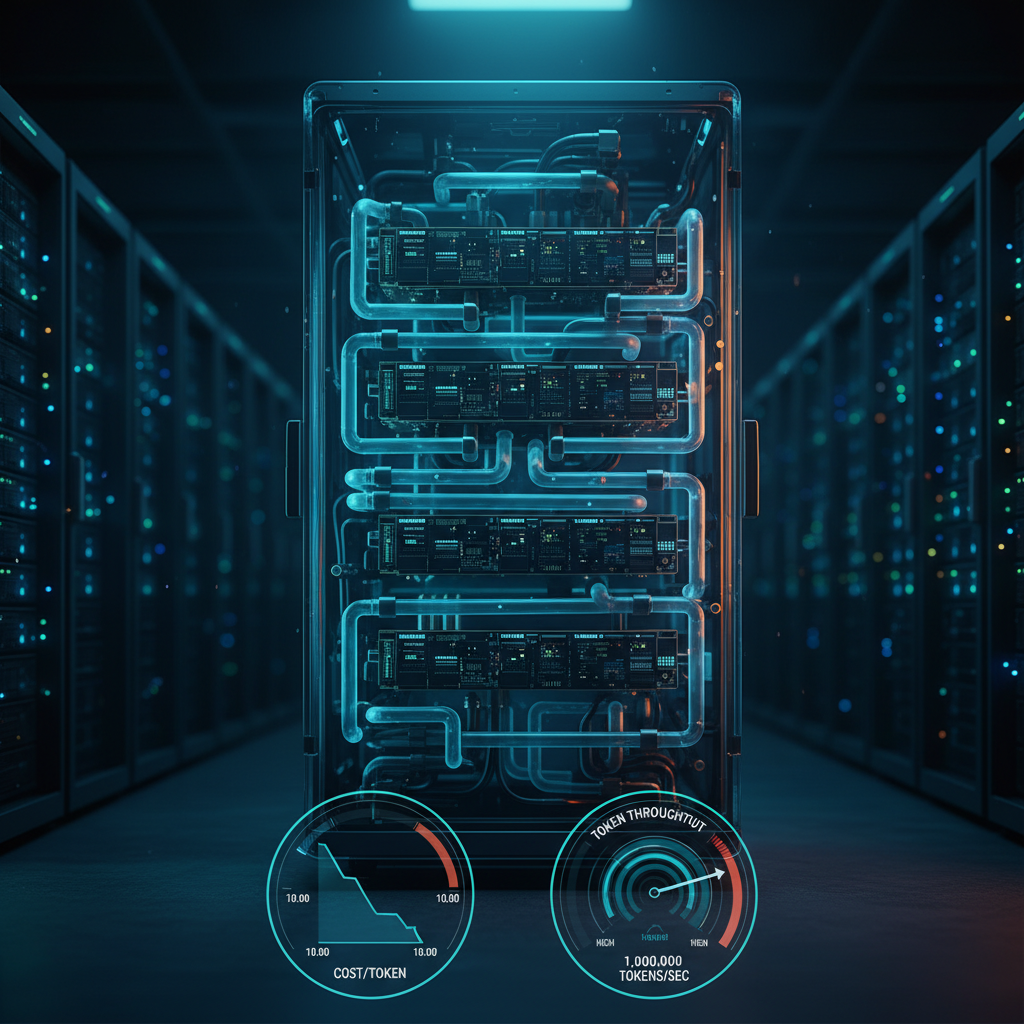
Table of Contents
When NVIDIA CEO Jensen Huang touched down in Taipei last Saturday, he was greeted by cameras and told the assembled press that “Vera Rubin is the largest product launch, probably in the history of Taiwan.” That is a bold claim for a hardware platform that most enterprise AI teams haven’t heard much about yet. But the numbers behind the Vera Rubin NVL72 — 10x inference performance per watt, 10x lower cost per token — are the kind of numbers that don’t stay in the data center. They flow downstream into cloud pricing, then into your LLM gateway economics, then into whether the committed-capacity contract your team is negotiating today looks smart or embarrassing eighteen months from now.
The Vera Rubin NVL72 just won both a Golden Award and the Sustainable Tech Special Award at the COMPUTEX Best Choice Awards, and NVIDIA’s Vera CPU — the custom ARM-based processor that pairs with the Rubin GPU in the rack — shipped to top AI labs on May 18. Jensen Huang’s keynote at COMPUTEX Taipei is June 1. The hardware rollout is real and ahead of schedule. What enterprise teams need to figure out now is not whether the efficiency is real — it is — but how it changes the architecture decisions they’re making today.
Architecture Impact
What changes in system design?
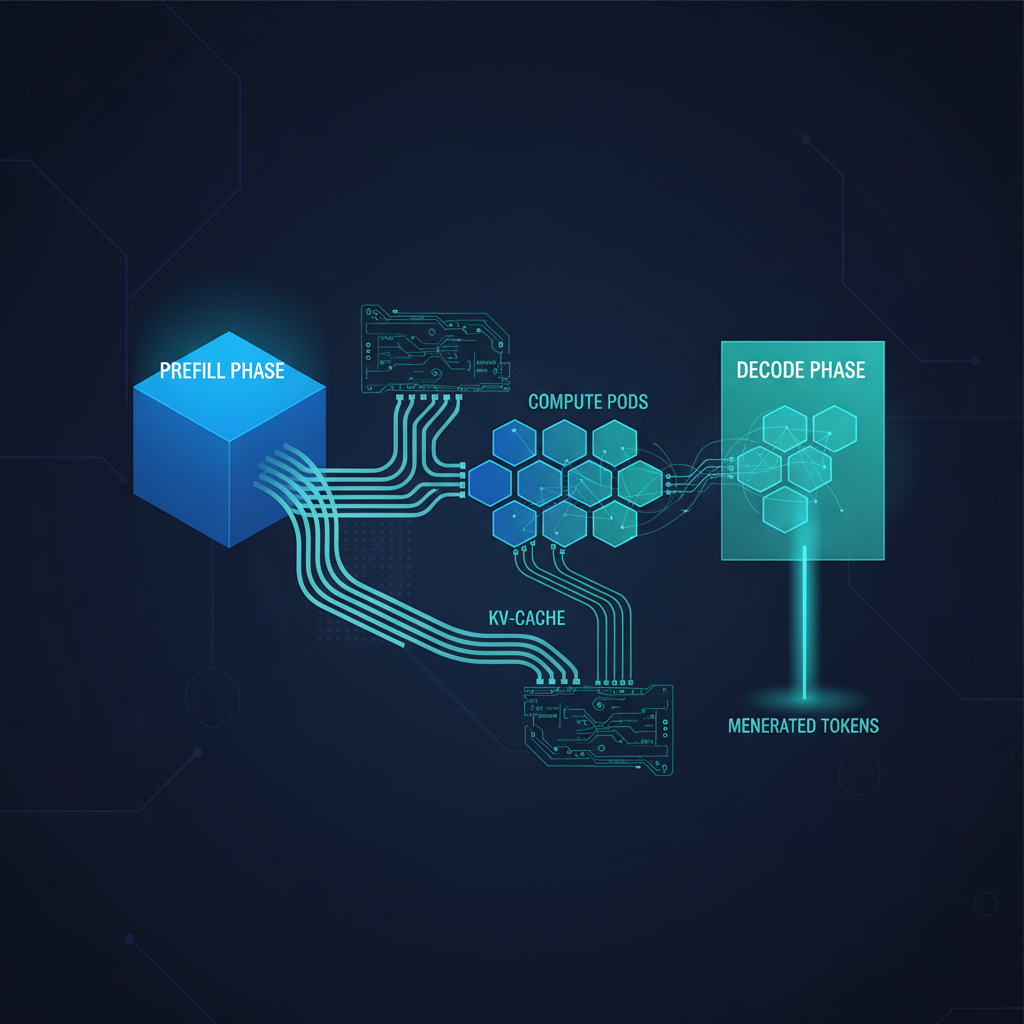
The Vera Rubin NVL72 is a rack-scale system: 72 Rubin GPUs and 36 Vera CPUs unified by a sixth-generation NVLink Switch fabric, fully liquid-cooled, operating at 45°C, with ConnectX-9 SuperNICs and Spectrum-X Ethernet Photonics co-packaged optics for scale-out. The architectural implication is not just raw throughput — it’s that inference hardware is now purpose-built for agentic workloads, long-context requests, and the fan-out patterns that compound AI systems create. The previous generation of inference racks was designed when the workload was single-model, single-call. The NVL72 is designed for multi-step agent pipelines that fan out to 5-10 model invocations per user request.
What new failure mode appears?
Enterprise teams building LLM gateway routing today are calibrating their cost models, latency budgets, and tier-routing logic against H100, H200, and B200 economics. When hyperscaler cloud endpoints backed by Vera Rubin hardware go live — likely H2 2026 or Q1 2027 — those routing models will silently over-route to older, more expensive tiers because the gateway has no visibility into which physical hardware pool it’s hitting. The failure mode is invisible cost inflation: your routing logic keeps sending requests to the “premium” pool because it doesn’t know the new pool exists, and your inference bill doesn’t drop even though cheaper capacity is available.
What enterprise teams should evaluate:
- LLM platform / MLOps teams: Audit your LLM gateway’s tier-switching logic today. If it doesn’t have a mechanism to add new inference pools without touching routing policies, you will miss the efficiency window when it opens.
- Finance and procurement: Any committed-capacity contract (OpenAI Guaranteed Capacity, Azure PTU, AWS Bedrock provisioned throughput) signed against current pricing should include a re-evaluation clause aligned to H2 2026 hardware rollouts. The efficiency curve changes the cost-per-token floor.
- AI architects: If you’re building agentic systems with 5-10 tool calls per user request, start modeling the compound inference savings from 10x cost reduction explicitly — because those savings enable use cases that aren’t viable at current pricing.
Cost / latency / governance / reliability implications:
At 10x lower cost per token, agentic workflows that currently cost $0.50-$2.00 per complex request at production scale become $0.05-$0.20. That’s the range where AI copilots stop being cost-constrained experiments and become default features in every enterprise product. On latency, the 35x higher throughput per watt for trillion-parameter models when paired with NVIDIA’s Groq 3 LPX means that even large-context reasoning chains — the kind that currently hit 10-30 second TTFT — compress significantly. The governance implication is less obvious but real: as inference gets cheaper, the incentive to cache, compress, or skip safety checks to reduce token spend diminishes. That’s probably a net positive for governance teams.
The Business Case
The efficiency economics of the Vera Rubin NVL72 matter most for the enterprise teams that aren’t buying the hardware directly. Almost nobody is. At $2M+ per rack and supply constrained for at least the next two to three quarters, the NVL72’s customers are hyperscalers and the largest AI labs. But the downstream effect — hyperscaler pricing on cloud inference dropping by 50-70% over the next 18 months as Vera Rubin capacity comes online — is the actual enterprise event.
Consider what happened to the inference cost curve after A100 → H100: API pricing dropped roughly 60-80% within 18 months of H100 deployment at scale. The Vera Rubin architecture is a larger jump than H100 was over A100. The reasonable expectation is that cloud inference prices for frontier models will look meaningfully different by Q1 2027 than they do today.
The business case implications split into two groups. The first group is enterprises currently negotiating committed-capacity agreements. The OpenAI Guaranteed Capacity product, Azure PTU, and AWS Bedrock provisioned throughput all lock in pricing against current hardware generations. If you’re signing a 3-year commitment today to secure 40% off list price, you may be securing 40% off a price that will be cut by 60% anyway when Vera Rubin supply reaches the cloud endpoints. The math on long-term committed capacity looks worse the more aggressive the hardware efficiency curve gets.
The second group is enterprises delaying AI deployments because current inference costs make use cases marginal. At 10x lower cost per token, several categories flip from “not viable” to “obvious.” Real-time AI co-pilots for knowledge workers at sub-second latency. Continuous AI monitoring of every trade, transaction, or customer interaction rather than sampled monitoring. Multi-agent research workflows that currently burn $50+ per complex task. These aren’t speculative — they’re use cases already in pilots that are being throttled by today’s cost floor.
What to Watch
The most important signal to track is when AWS, Azure, and Google Cloud announce Vera Rubin-powered inference endpoint SKUs in their API catalogs. That’s the moment the efficiency curve moves from data center marketing to your production cost model. Based on historical hyperscaler deployment cycles, the reasonable range is 6-15 months after volume delivery to labs begins (which started May 18). Watch for announcements at re:Invent, Microsoft Build, and Google Cloud Next.
The second signal is what happens to the Cerebras, Groq, and wafer-scale fast-inference tier when Vera Rubin supply scales. The fast-inference tier exists precisely because GPU-based inference had a latency floor that wafer-scale architectures could beat. If Vera Rubin’s throughput and latency figures hold under production load — and Huang’s claim of 35x higher throughput per watt for trillion-parameter models is verifiable in benchmarks — the gap that made wafer-scale commercially compelling narrows significantly. This is a second-order effect that could reshape the inference vendor landscape over the next 12-18 months.
Third, watch for the effect on agentic AI adoption. The Gartner projection that 40% of agentic AI projects will be cancelled by 2027 is cited frequently, but it was projected against current cost structures. At 10x lower inference cost, the ROI math on many of those projects changes materially. Some cancellations will happen anyway — governance gaps, data readiness issues, reliability problems. But the ones cancelled because they cost too much to run in production may come back.
The SuperML Take
The framing of the Vera Rubin announcement as a hardware story misses what’s actually happening. NVIDIA is not just releasing a faster GPU. It is releasing the first inference rack designed from the ground up for the workload pattern that agentic AI creates: multi-step, long-context, fan-out-heavy, latency-sensitive. The architecture of the NVL72 — dedicated scale-up fabric, high-bandwidth memory, photonic co-packaged optics for scale-out, BlueField-4 DPUs for data processing — reflects a detailed understanding of what compound AI systems actually do under load. That understanding is encoded in silicon, which means it persists.
The enterprise teams that will benefit most from this shift are the ones who have been building routing abstraction layers rather than direct model integrations. If your agentic architecture calls OpenAI directly, you will need engineering work to capture the efficiency gains when cheaper Vera Rubin-backed endpoints appear. If your architecture routes through a policy-aware LLM gateway with tier-substitution logic, you capture the gains by updating a routing config. The architectural bet on portability is about to pay a hardware efficiency dividend.
There is a real risk worth naming: the 10x claim is a per-watt efficiency number, not a raw cost-per-token number at the point of enterprise purchase. Hyperscalers have margins. Cloud pricing decisions involve more than hardware cost. The actual reduction in enterprise API pricing will lag the hardware efficiency curve by 12-18 months and will likely land somewhere between 40-70% rather than the full theoretical 10x. That still reshapes economics meaningfully — but teams building business cases that assume the full 10x passes through immediately are going to miss their ROI projections.
The deeper implication is about what gets built when inference is cheap. Every year, there are dozens of AI applications that would generate clear business value but fail the cost-per-transaction hurdle at current pricing. Those applications don’t disappear — they sit in backlogs. When the cost floor drops by 5-7x over the next 18 months, a significant fraction of that backlog will cross the viability line in the same quarter. The teams that have the architecture, the governance frameworks, and the production AI infrastructure ready to deploy at that moment will have a meaningful window advantage. That’s the real reason the Vera Rubin NVL72 is worth understanding now, not in Q3 2027 when hyperscaler endpoints go live and everyone is reading the same pricing announcement at the same time.
Sources
- NVIDIA GTC Taipei at COMPUTEX: Live Updates on What’s Next in AI — NVIDIA Blog, May 21, 2026
- NVIDIA Vera Rubin NVL72 product page — NVIDIA
- Vera Arrives: NVIDIA’s First CPU Built for Agents Lands at Top AI Labs — NVIDIA Blog, May 18, 2026
- NVIDIA CEO Jensen Huang at Dell Technologies World: ‘Demand Is Going Parabolic, Utterly Parabolic’ — NVIDIA Blog, May 18, 2026
- NVIDIA’s Next Wave of AI Hardware Shakes Up COMPUTEX 2026 — EJS Computers
- Nvidia GTC 2026: Nvidia’s hardware strategy goes beyond GPU in AI inference pivot — Constellation Research
Enterprise AI Architecture
Want more enterprise AI architecture breakdowns?
Subscribe to SuperML.