Colorado Repealed Its AI Act. 44 States Didn't. Here's the Enterprise Play.
Colorado's last-minute repeal of its AI Act — replaced with a disclosure-only framework — reveals the underlying instability of state-by-state AI compliance strategies. Here's what the 1,561-bill patchwork means for enterprise AI teams.

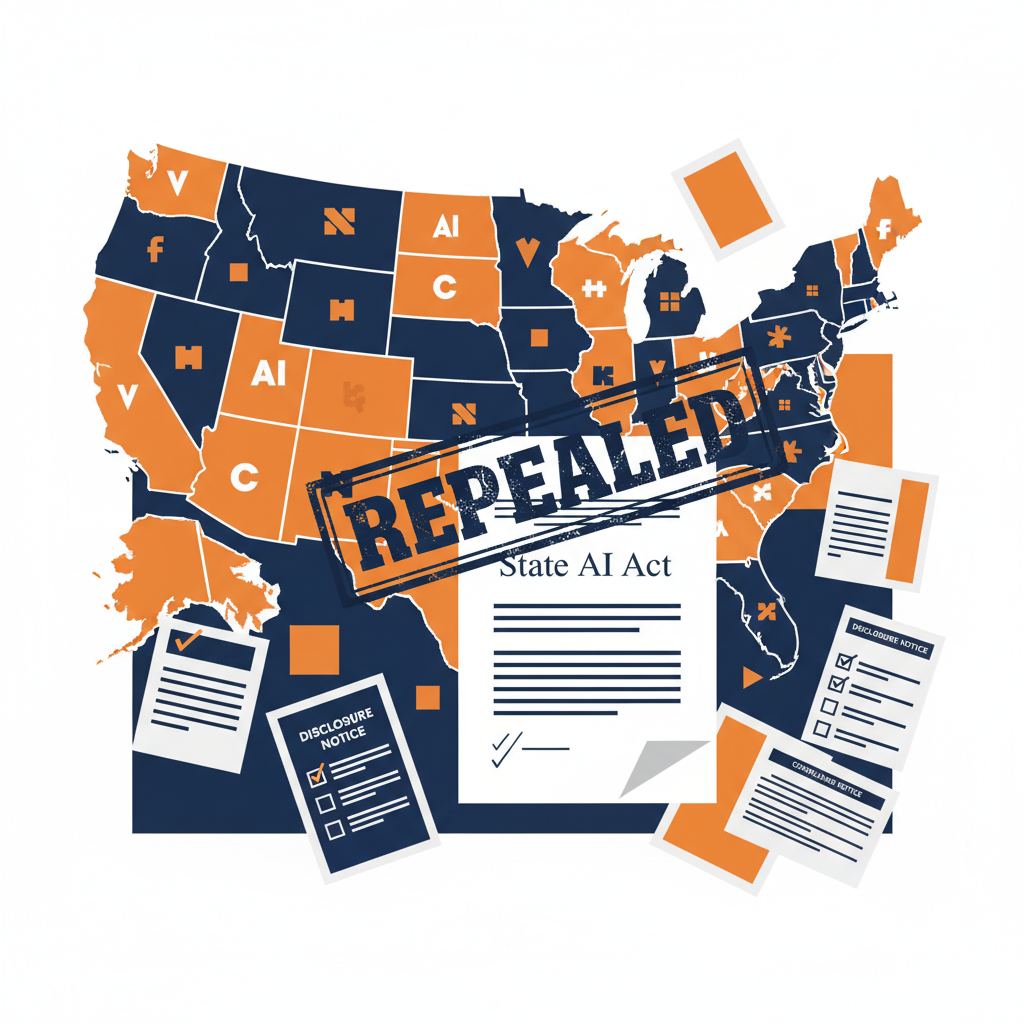
Table of Contents
Six weeks before Colorado’s landmark AI Act was supposed to go into effect, Governor Jared Polis signed a different bill that repealed it entirely.
SB 189, “Automated Decision-Making Technology,” became law on May 14, 2026. The original Colorado AI Act — SB 24-205, which had a June 30, 2026 effective date — is gone. What replaced it is a dramatically lighter-touch framework that eliminates risk assessment requirements, annual impact assessments, and the duty of care to prevent algorithmic discrimination. In its place: consumer notices before AI-assisted decisions, post-adverse outcome disclosures, and a 3-year recordkeeping obligation.
For many enterprises, particularly those in financial services with GLBA-regulated entity exemptions, the instinct is relief. That instinct is wrong. Not because the new law is harder to comply with — it’s easier. But because the lesson here isn’t about Colorado. It’s about what happens when you build your enterprise AI compliance program around any single state’s regulatory framework.
While Colorado blinked, 44 other states didn’t. As of March 2026, lawmakers in 45 states have introduced 1,561 AI-related bills — already surpassing the total for all of 2024. In just two weeks of March, governors in seven states signed 19 new AI laws. The patchwork isn’t converging. It’s accelerating.
Regulatory & Compliance Angle
What Colorado’s original law required. SB 24-205 was the most comprehensive state AI governance law in the US — applying to “high-risk AI systems” used in eight consequential domains: employment, housing, financial services, healthcare, education, insurance, government services, and legal services. Deployers had to implement risk management programs aligned to the NIST AI Risk Management Framework, conduct annual impact assessments for each high-risk system, provide consumer disclosures, and maintain three years of records. Developers faced their own documentation and testing obligations.
What SB 189 replaced it with. The new law pivots from AI governance to AI disclosure. The central concept is “automated decision-making technology” (ADMT) that “materially influences” a consequential decision — a lower bar than high-risk AI systems, but with far fewer obligations attached. What survives: point-of-interaction consumer notices, post-adverse outcome disclosures (explanation, data correction, and human review rights), and three-year record retention. What was eliminated: risk management programs, annual impact assessments, the duty of care to prevent algorithmic discrimination, and developer governance obligations.
The GLBA exemption — and its limits. Colorado SB 189 explicitly carries over the entity-level exemption from the Colorado Privacy Act for GLBA-regulated financial institutions. Banks and credit unions covered by Gramm-Leach-Bliley, and using AI consistent with their existing GLBA obligations, are largely exempt from SB 189’s consumer rights provisions. This looks like a significant win for the banking sector. It is not a get-out-of-jail card. GLBA doesn’t exempt institutions from the Equal Credit Opportunity Act, the Fair Housing Act, the Fair Credit Reporting Act, or Section 5 of the FTC Act. The underlying discrimination liability for AI-assisted credit and underwriting decisions is exactly where it was before SB 189. What changed is the state-level compliance layer — not the federal exposure.
The remaining multi-state compliance reality. Colorado’s reset doesn’t simplify the landscape — it adds a data point. California’s CCPA ADMT regulations require proactive opt-out rights from AI-assisted decisions, regardless of whether an adverse outcome occurs. Illinois has active AI employment legislation. Texas, New York, and Utah have each passed narrower AI laws targeting specific sectors or use cases. The White House released a National AI Policy Framework on March 20, 2026, urging Congress to pass federal legislation that would preempt state laws — but that framework is non-binding, and congressional action on AI regulation is not imminent. Until federal preemption legislation passes, every state law on the books remains enforceable.
For financial services teams, the practical compliance matrix now spans: GLBA exemption scope and limits, ECOA and fair lending AI requirements, state-specific AI disclosure obligations (with Colorado’s new framework effective January 1, 2027), California CCPA ADMT opt-out requirements (for California residents), state employment AI rules where applicable, and incoming attorney general rulemaking in Colorado that will clarify how “materially influences” is defined in practice.
What to Watch
The attorney general rulemaking clock matters most in the near term. Colorado’s SB 189 directs the attorney general to adopt rules before January 1, 2027, covering the content and format of post-adverse outcome disclosures and the operationalization of consumer rights. How the AG defines “materially influence” will determine the law’s real scope — and whether AI systems used in credit scoring, loan decisioning, and insurance underwriting fall inside or outside the trigger threshold.
Federal preemption is the long-horizon bet. The Trump administration’s March 2026 framework explicitly calls for Congress to replace the state patchwork with a uniform federal AI rulebook. The political reporting is skeptical — broad preemption faces resistance from lawmakers who see state-level experimentation as a feature, not a bug. But if federal legislation does pass, it will almost certainly include sector-specific carve-outs for financial services that overlap with existing OCC, Fed, and FDIC model risk guidance. Teams should track the SR 26-2 RFI process — regulators there already signaled that generative and agentic AI will get its own guidance, and that guidance will likely impose the risk assessment and impact evaluation requirements that Colorado just stripped out at the state level.
California CCPA ADMT regulations are the next compliance forcing function for anyone serving California residents. Unlike Colorado’s post-adverse model, California establishes proactive opt-out rights. A consumer doesn’t need to receive a bad outcome to invoke their rights — they can opt out of ADMT use in consequential decisions upfront. For financial institutions, this creates a category of California residents who may need a non-ADMT decision pathway, which is an operational architecture problem, not just a legal one.
Watch for copycat legislation in states that watched Colorado’s original law get industry pushback. Colorado’s repeal may actually embolden states that want to pass lighter-touch frameworks — and signal to states considering more aggressive approaches that the political cost of a comprehensive AI governance law is high.
The Business Case
The Colorado repeal creates a false sense of opportunity. Compliance teams are tempted to deprioritize AI governance work when a major state law gets softened six weeks before it takes effect. That is exactly the wrong response.
Here’s the math enterprise AI leaders should be running: Colorado’s new law still requires disclosure infrastructure, decision logging sufficient for post-adverse outcome explanations, human review workflows, and three-year record retention. California’s CCPA ADMT regulations require opt-out mechanisms and proactive disclosure. The OCC’s Spring 2026 Risk Perspective flags AI model risk as a supervisory priority. SR 26-2’s RFI process is actively soliciting comments on generative and agentic AI governance — meaning formal requirements are coming. Every piece of infrastructure built today for Colorado or California disclosure compliance is directly reusable when federal AI governance rules land. Every team that delays is paying twice.
The business case for building durable compliance architecture now, rather than reacting to each state law change, is straightforward: the cost of retroactive compliance is 3-5x the cost of proactive design. An enterprise that embeds AI decision logging, consumer disclosure workflows, and human review escalation paths into its AI infrastructure once — at the application layer, jurisdiction-agnostic — is positioned for whatever Colorado’s AG rulemaking, California’s CCPA ADMT implementation, and the eventual federal framework actually require. An enterprise that tracks each state law separately and implements point solutions for each is building technical debt faster than it’s reducing regulatory exposure.
Financial services teams also need to account for a subtler risk: GLBA exemptions are entity-level, not use-case-level. A bank’s core loan decisioning system may be exempt from Colorado’s consumer rights provisions — but the same institution’s AI-assisted marketing, insurance referrals, or employment decisions may not be. Mapping AI use cases to the GLBA exemption scope before assuming broad coverage is foundational work that most institutions haven’t finished.
The SuperML Take
Colorado’s reversal is not primarily a story about Colorado. It’s a stress test of how enterprise AI compliance programs are architected — and most of them failed before the test even began.
The organizational instinct to build compliance programs around specific regulatory text is rational in a stable regulatory environment. The US state AI law landscape is not a stable regulatory environment. 1,561 bills across 45 states, 19 laws signed in two weeks, and a major state AI act repealed 6 weeks before its effective date are not signals of a converging regulatory framework. They’re signals of a system still actively searching for a model. Teams that structured their AI governance work around “what Colorado requires” learned this the hard way in May 2026.
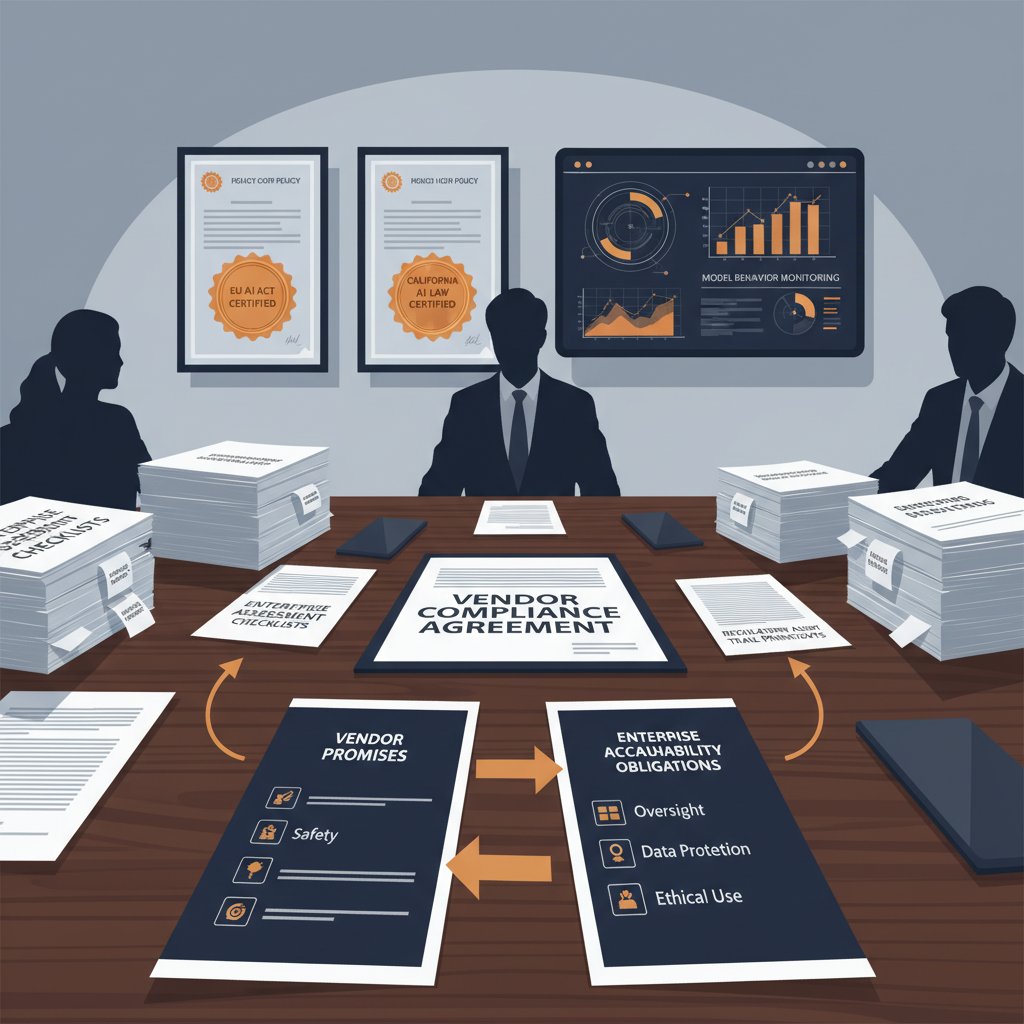
The production-ready version of state AI compliance isn’t a state-by-state tracker with a legal team assigned to each jurisdiction. It’s an AI decision logging architecture that captures model inputs, outputs, and decision rationale in a format that supports any disclosure obligation; a consumer rights workflow that handles explanation, correction, and human review requests without requiring a bespoke implementation for each state; and a policy layer that can toggle disclosure requirements on or off by jurisdiction without requiring application code changes. That’s the architecture that survives regulatory volatility — not the one optimized for a single state’s requirements that just got repealed.
For financial services specifically: the absence of a state-level risk assessment requirement is not permission to skip the risk assessment. The OCC, the Fed, and the FDIC are all on record saying that their existing examination processes will scrutinize AI model risk even in the SR 26-2 governance vacuum. The senior examiner reviewing your credit scoring AI doesn’t care that Colorado’s AG hasn’t finished its rulemaking yet. What they care about is whether you have documentation of model purpose, known limitations, testing methodology, and human oversight mechanisms — exactly the requirements that SB 24-205 would have imposed and that SB 189 no longer does. If you were building toward Colorado compliance, keep building. Just frame it differently internally.
The real signal from Colorado isn’t that AI compliance requirements are getting lighter. It’s that the regulatory landscape is moving faster than any single compliance program can track — and that durable AI governance architecture needs to be designed for change, not for any particular state’s regulatory text.
Sources
- Colorado Hits Reset on AI Regulation With a New AI Act — Morrison Foerster (May 15, 2026)
- Colorado Legislature Repeals and Replaces Colorado AI Act — Wilson Sonsini
- Colorado Rewrites Its AI Law — Consumer Financial Services Law Monitor
- Colorado AI Act Repealed and Replaced — Davis Wright Tremaine
- 19 State AI Laws in Two Weeks: What Every Enterprise Should Build — Swept AI
- State AI Legislation Tracker 2026 — multistate.ai
- White House National AI Policy Framework — Holland & Knight
- State AI Laws — Where Are They Now? — Cooley
- SB 26-189 Automated Decision-Making Technology — Colorado General Assembly
Enterprise AI Architecture
Want more enterprise AI architecture breakdowns?
Subscribe to SuperML.