Vector Database Comparison for RAG 2026: Pinecone vs ChromaDB vs Redis vs Weaviate
The vector database you choose for your RAG system determines more than retrieval speed — it shapes your architecture's scalability ceiling, operational complexity, cost model, and what filtering capabilities you have at query time. This is the production comparison for teams choosing in 2026.

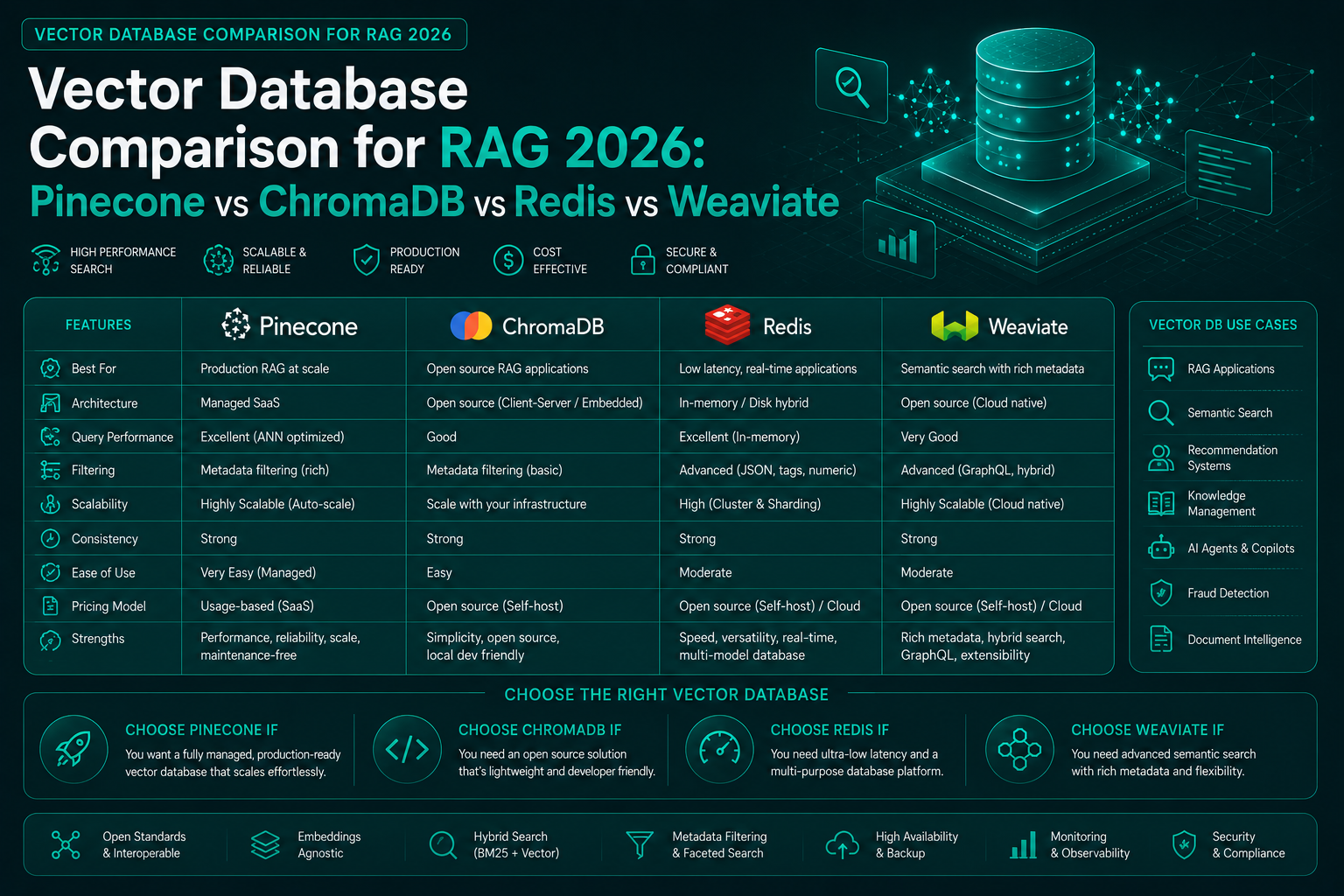
Table of Contents
Most vector database comparisons are benchmarks: millisecond latency at 1M vectors, recall@10 on ANN-Benchmarks, queries per second under synthetic load. Those numbers are useful and not the most important thing for production RAG decisions.
The most important factors in a production vector database choice for RAG are: what metadata filtering capabilities does it support at query time, how does it handle corpus updates without downtime, what does the operational model look like at your scale, how does it fit your data residency requirements, and what’s the cost model when your corpus grows by 10x.
This comparison covers the four most commonly evaluated options for enterprise RAG in 2026: Pinecone, ChromaDB, Redis Vector, and Weaviate. Each has a genuine use case where it’s the right answer. Each has failure modes where teams pay a real price for choosing it.
What RAG Actually Needs from a Vector Database
Before comparing options, it helps to be explicit about what a production RAG system needs from its vector store — because the requirements are different from the benchmarks.
Hybrid search (vector + keyword): Pure semantic search misses exact terminology matches — regulatory terms, product names, internal codes, defined acronyms. Production RAG systems need hybrid search that combines embedding similarity with BM25 or TF-IDF keyword matching. This is not a nice-to-have; it is a retrieval quality requirement for any corpus with domain-specific terminology.
Metadata filtering at query time: You need to filter retrieved chunks by metadata (document type, date range, source system, access tier, department) before or after vector search. A compliance assistant should only retrieve from compliance documents. A product knowledge RAG should only retrieve active products. Pre-filtering by metadata before ANN search is architecturally different from post-filtering after retrieval, and the difference matters for both recall and cost.
Corpus updates without full re-index: Production corpora change. New documents are added, old documents are updated, some are deleted. The vector database must handle incremental updates without requiring a full re-index that takes down retrieval during the update window.
Consistent retrieval across replicas: In high-availability deployments, all query replicas must return consistent results. This is trivially true for small single-node deployments and becomes a real consistency challenge at scale.
Auditability: For regulated environments, every retrieval must be loggable — what chunks were retrieved for which query, with what similarity scores, from which documents. This is a source attribution requirement, not a debugging convenience.
Pinecone
What it is: Managed vector database as a service. You create an index, upsert embeddings, and query — Pinecone handles everything else.
Architecture: Serverless (Pinecone Serverless, launched 2024) or pod-based (legacy, still available for large-scale workloads). Pinecone Nexus (launched 2026) adds a context compilation layer above the vector index, pre-processing knowledge into agent-optimized retrieval artifacts.
Strengths
Zero operational overhead. Pinecone is the right choice when your team has no capacity to operate a vector database. No infrastructure, no index management, no scaling decisions. The managed service handles all of it. For teams where the AI engineers’ time is the constraint, this operational simplicity has real value.
Metadata filtering is production-grade. Pinecone’s metadata filtering is pre-filtering by default (filter before ANN search, not after) in Serverless. This is the correct architecture for high-selectivity filters: if you’re filtering to 5% of your corpus by metadata, filtering first means the ANN search runs on 5% of the data, not 100%. For RAG with strict access control (retrieve only from documents the user is authorized to see), this matters enormously.
Horizontal scale without friction. Serverless Pinecone scales to billions of vectors without index sharding decisions. For enterprise corpora that will grow unpredictably, this is a genuine advantage.
Weaknesses
No hybrid search natively. Pinecone does not support BM25 or keyword search natively. You must implement hybrid search externally: run a separate BM25 index (Elasticsearch, Opensearch, or a dedicated BM25 system), combine scores, then re-rank. This adds architecture complexity and a second system to operate — which partially negates the operational simplicity advantage.
Data residency constraints. All data routes through Pinecone’s infrastructure. For financial services teams with strict data residency requirements, customer PII and proprietary financial data cannot go into a third-party managed service without explicit contractual protection and often explicit regulatory approval. Pinecone’s GCP/AWS regional deployments help but do not fully resolve the question for all regulated data classifications.
Cost model at high update frequency. Pinecone Serverless pricing is based on read units and write units. For RAG systems with frequent corpus updates (daily document ingestion at scale), the write unit cost compounds. At high update frequency, pod-based Pinecone or a self-hosted alternative is often cheaper.
Verdict: Best for teams that want managed simplicity, have corpus data that can leave their infrastructure, and don’t need native hybrid search. Strong choice for SaaS products, internal tools on non-regulated data, and rapid prototyping that needs to reach production fast.
ChromaDB
What it is: Open-source, embeddable vector database. Designed to run in-process (for development and small deployments) or as a standalone server.
Architecture: ChromaDB is primarily an embedding database — store embeddings, store metadata, query by similarity with optional metadata filtering. It uses HNSW for ANN indexing. No managed cloud offering; you run it yourself.
Strengths
Zero friction for development and prototyping. ChromaDB runs in-process with a single pip install. For development environments, evaluation, and small deployments, there’s no simpler path from “I have embeddings” to “I can query them.” This is its design intent and it delivers.
Metadata filtering support. ChromaDB supports where clauses for metadata filtering at query time. The filtering is post-filtering (filter after retrieval), which has implications for recall when you have high-selectivity filters — but for moderate-selectivity metadata filtering, it works correctly.
Open-source, runs anywhere. For teams with strict data residency requirements, ChromaDB runs entirely within your infrastructure. No data leaves your boundary. This is the primary reason financial services teams choose ChromaDB over managed alternatives.
Native hybrid search (ChromaDB 0.5+). ChromaDB added keyword search support in later versions. The implementation combines embedding search with BM25 and supports configurable hybrid scores — which is a material improvement for domain-specific RAG corpora.
Weaknesses
Production operational complexity. ChromaDB’s distributed mode (for production deployments beyond a single node) is newer and less battle-tested than its competitors. Teams that start with ChromaDB in development frequently hit operational challenges when scaling to production: distributed consistency, backup and recovery, index persistence reliability.
Performance ceiling for large corpora. For corpora beyond ~10M vectors, ChromaDB begins to show scaling limitations that Pinecone (serverless) or Weaviate (distributed) handle more gracefully. The HNSW index is fast for moderate scale; it becomes a bottleneck at large scale.
No managed offering. If you value operational simplicity, ChromaDB requires you to operate it. For small teams, “run ChromaDB yourself” is a maintenance burden that grows with corpus size.
Verdict: Best for development environments, small-to-medium corpora within your own infrastructure, and teams with data residency requirements that prevent using managed services. Not the right choice for large-scale production RAG without a team prepared to operate a distributed system.
Redis Vector (Redis Stack / Redis Enterprise)
What it is: Vector search capability built into Redis, the operational data store most enterprises already have. Redis Vector Search (RediSearch module) adds vector indexing and similarity search to Redis’s existing key-value and hash data structures.
Architecture: HNSW or FLAT index on top of Redis’s existing data model. The key design property: Redis stores both your metadata (as Redis hashes or JSON) and your vector embeddings in the same operational data store.
Strengths
Semantic caching for RAG. This is Redis’s killer use case for RAG systems. Because Redis already operates as a high-performance cache, you can implement semantic caching on top of the vector index: store previously-answered queries and their responses, find semantically similar incoming queries, and return cached responses for near-duplicate questions. For enterprise RAG with high query repetition rates (compliance Q&A, product knowledge), semantic caching reduces LLM inference costs by 40–60%.
Co-located metadata and vectors. You don’t need a separate metadata store — the same Redis instance that holds your vectors holds all the metadata, the access control rules, the document metadata, and potentially the application cache. For teams that want to minimize infrastructure components, this co-location is a real architectural simplification.
Low-latency retrieval. Redis operates in-memory. For latency-sensitive RAG applications (real-time customer service, interactive analytics), Redis Vector’s P99 latency is consistently lower than disk-based vector stores.
Enterprise Redis is already deployed everywhere. Most large enterprises have Redis Enterprise in production. Adding the RediSearch module to an existing Redis deployment is operationally simpler than deploying a new vector database system.
Hybrid search via RediSearch. RediSearch has native full-text search (BM25) built in alongside vector search. Hybrid search over the same Redis index is a first-class capability, not an afterthought.
Weaknesses
Memory cost at scale. Redis is an in-memory store. For large vector corpora (100M+ vectors at 1536 dimensions), the memory footprint is substantial — and expensive at cloud RAM pricing. Redis is cost-effective at moderate scale; it becomes prohibitively expensive for very large corpora without careful quantization and tiering.
Not designed as a primary vector store for very large corpora. Redis Vector is excellent as a semantic cache and for moderate-scale RAG. For enterprises with billions of vectors, it’s not the primary vector store — it’s a caching and retrieval acceleration layer above Pinecone or Weaviate.
Operational complexity of Redis Enterprise at scale. Redis is straightforward to operate at small scale and complex to operate at large scale. Enterprise Redis clustering, failover, and replication add operational overhead.
Verdict: Best as a semantic cache layer for high-volume RAG systems, for latency-sensitive retrieval, for hybrid search without a separate search index, and for teams that already operate Redis Enterprise. Works well as a component in a multi-tier RAG architecture rather than as the sole vector store for very large corpora.
Weaviate
What it is: Open-source vector database with native multi-modal support, GraphQL/gRPC API, and built-in vectorization modules.
Architecture: Weaviate stores objects (not just embeddings) — each object has properties (metadata), a vector, and a class (schema). This object-centric model is different from the flat embedding + metadata model of the other options and enables more sophisticated query patterns.
Strengths
Native hybrid search (BM25 + vector). Weaviate’s hybrid search is first-class — the same query API supports pure vector search, pure BM25, or weighted hybrid. The alpha parameter controls the blend. For production RAG where hybrid search is a requirement, Weaviate’s native implementation is cleaner than workarounds in Pinecone or the add-on in ChromaDB.
GraphQL query API with joins. Weaviate’s GraphQL API supports cross-reference queries — retrieving related objects across classes. For RAG systems with complex relational structure (document chunks linked to source documents linked to knowledge graph entities), Weaviate’s data model handles this more naturally than the flat metadata model in competitors.
Multi-tenancy for SaaS. Weaviate’s tenant isolation model is production-grade, with dedicated vector spaces per tenant. For SaaS products building multi-tenant RAG (each customer has their own knowledge base), Weaviate’s native multi-tenancy is a significant architectural advantage over building tenant isolation on top of a single-tenant vector store.
Weaviate Cloud (managed) + self-hosted. Both options exist. Enterprise teams with data residency requirements can self-host; teams that want managed simplicity can use Weaviate Cloud.
Modules for auto-vectorization. Weaviate has built-in vectorization modules (OpenAI, Cohere, Hugging Face, etc.) that can automatically vectorize text at write time. For teams that don’t want to manage embedding generation as a separate step, this simplifies the ingestion pipeline.
Weaknesses
Higher learning curve than alternatives. Weaviate’s object model, schema definitions, and GraphQL API require more upfront learning than Pinecone’s simple upsert/query API or ChromaDB’s Python-native interface.
Operational complexity for self-hosted production. Weaviate’s distributed mode (for large-scale self-hosted deployments) requires Kubernetes and careful configuration. For teams without Kubernetes expertise, self-hosted Weaviate at production scale is non-trivial.
Managed cloud less mature than Pinecone. Weaviate Cloud is younger than Pinecone as a managed service. Teams that need enterprise SLA guarantees and support should evaluate current Weaviate Cloud offering maturity against their requirements.
Verdict: Best for multi-tenant SaaS RAG, complex knowledge graph-adjacent retrieval, and production hybrid search without external workarounds. Self-hosted Weaviate is the strongest option for large-scale RAG within your own infrastructure when ChromaDB has hit its scaling ceiling.
The Decision Matrix
| Requirement | Pinecone | ChromaDB | Redis Vector | Weaviate |
|---|---|---|---|---|
| Managed service | ✅ Best-in-class | ❌ | ✅ Redis Cloud | ✅ Weaviate Cloud |
| Self-hosted / on-prem | ❌ | ✅ | ✅ | ✅ |
| Data residency (no 3rd party) | ❌ | ✅ | ✅ | ✅ |
| Native hybrid search | ❌ Needs workaround | ✅ v0.5+ | ✅ RediSearch | ✅ Best native |
| Metadata pre-filtering | ✅ Serverless | Post-filter | ✅ | ✅ |
| Semantic caching | ❌ | ❌ | ✅ Native | ❌ |
| Multi-tenant SaaS | Good | Limited | Limited | ✅ Native |
| Scale to 1B+ vectors | ✅ | ❌ | With tiering | ✅ |
| Low-latency (P99 < 20ms) | Good | Good | ✅ In-memory | Good |
| Operational simplicity | ✅ | Dev only | Medium | Medium |
| Cost at 100M vectors/month | High write cost | Infrastructure | RAM-bound | Medium |
| Open source | ❌ | ✅ | ✅ | ✅ |
The Architecture Patterns
Pattern 1: Development → Production with ChromaDB → Weaviate migration path
Start with ChromaDB (zero setup, in-process for development). When you hit ChromaDB’s scaling ceiling or need better distributed performance, migrate to self-hosted Weaviate. Both store metadata + vectors; the migration is mostly an ingestion job, not an architecture rewrite.
Pattern 2: Managed production with Pinecone + external BM25
Use Pinecone for the vector retrieval component (managed, scalable, strong pre-filtering). Add a separate BM25 index (Elasticsearch or Opensearch) for keyword search. Implement hybrid score fusion at the retrieval layer. More complex architecture, but each component is best-in-class at its function.
Pattern 3: Enterprise multi-tier RAG with Redis as semantic cache
Primary vector store: Weaviate (self-hosted, hybrid search). Semantic cache: Redis Vector. For high-volume enterprise RAG (10k+ queries/day with significant query repetition), 40–60% of queries hit the semantic cache and never reach the vector store. This dramatically reduces both latency and cost at scale.
Query → Redis Semantic Cache (hit? → return cached response)
      ↓ (miss)
      Weaviate Hybrid Search (vector + BM25)
      ↓
      Re-ranker
      ↓
      LLM Generation
      ↓
      Redis Cache Update
Pattern 4: Regulated financial services — data residency first
Self-hosted Weaviate on-prem (or in your private cloud) for the primary vector store. Self-hosted Redis Enterprise for semantic caching. No data leaves your regulatory boundary. Hybrid search native in Weaviate. Semantic caching with Redis. Full audit trail via your own infrastructure.
What Actually Changes Your Decision
If you’re genuinely choosing in 2026, here’s what matters most:
If your data cannot leave your infrastructure → self-hosted only (ChromaDB, Weaviate, Redis Vector). Pinecone is off the table regardless of its other advantages.
If you need production-grade hybrid search without operational complexity → Weaviate Cloud or Redis Vector. Both have native hybrid search. Pinecone requires you to build it.
If you have a multi-tenant SaaS product → Weaviate. Its native multi-tenancy model is purpose-built for this and is significantly better than the alternatives.
If operational simplicity is the constraint → Pinecone. Accept the data residency and hybrid search limitations; buy back time for your team.
If semantic caching is valuable for your use case → Redis Vector as a cache layer, alongside whichever primary vector store suits your other requirements.
If you’re still in development → ChromaDB. Don’t over-architect retrieval infrastructure for a system that doesn’t have production data or traffic yet.
Related Reading
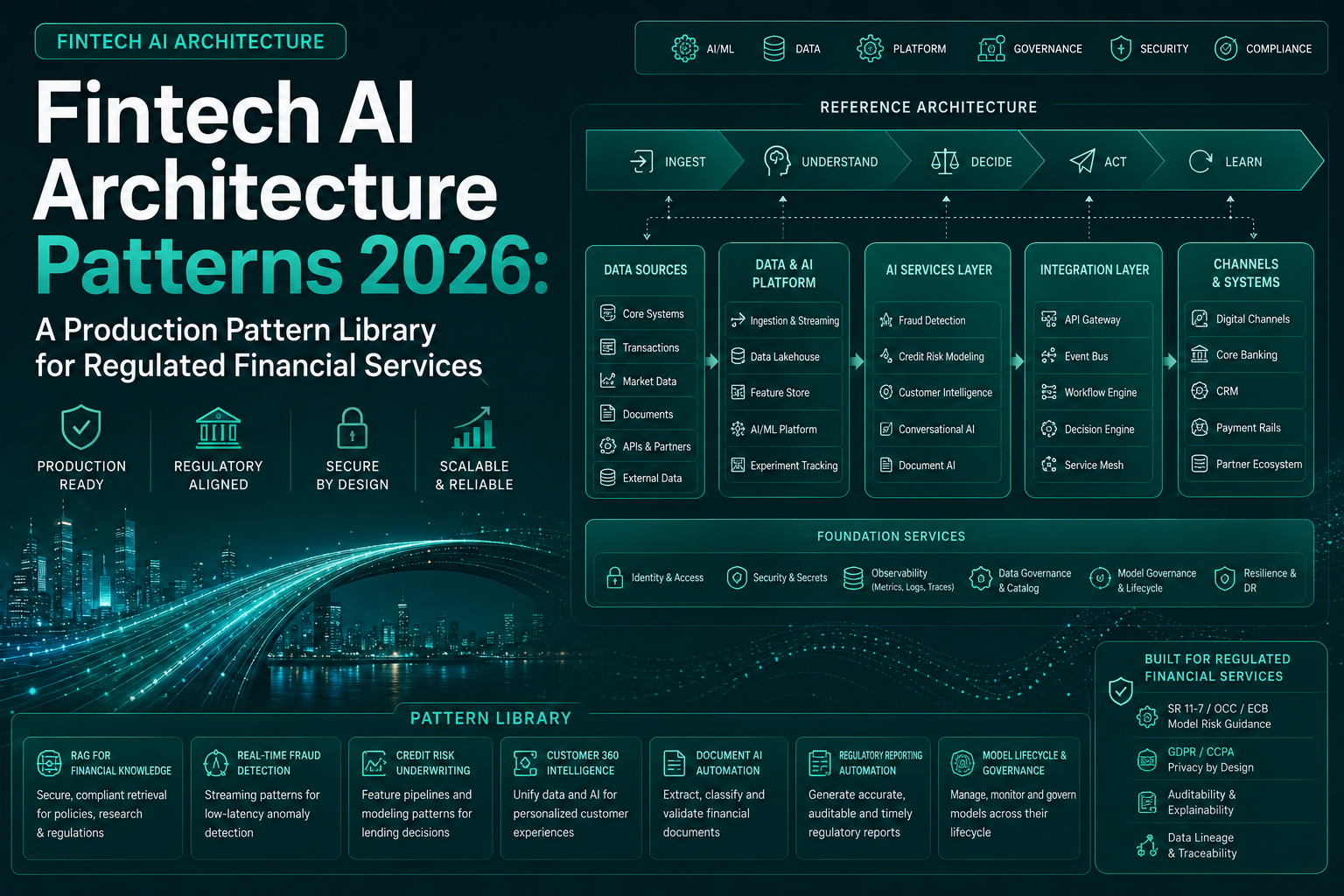
- Fintech AI Architecture Patterns 2026 — Pattern 1 (Regulated RAG) and Pattern 5 (Semantic Cache) apply directly
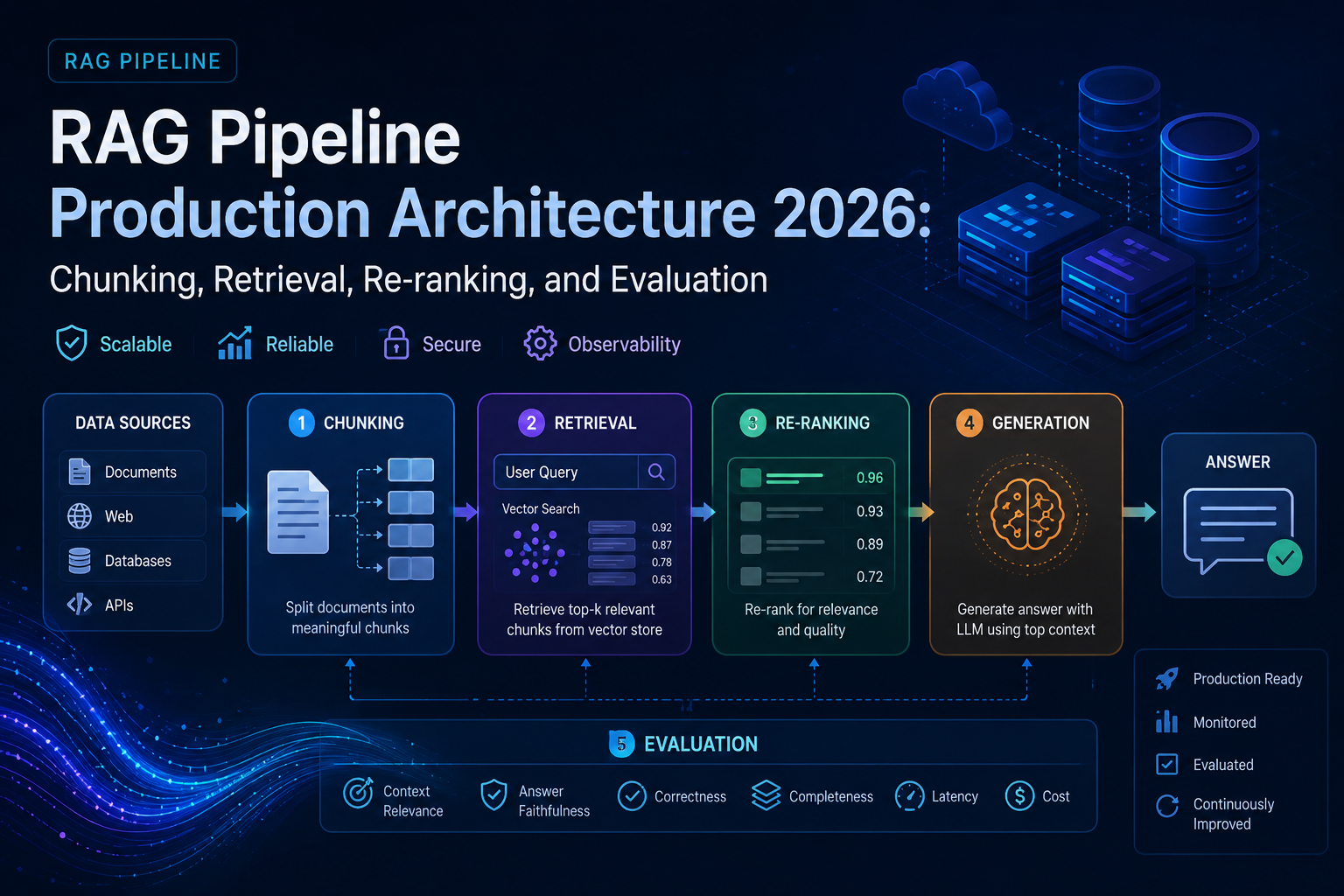
- RAG Pipeline Production Architecture — the full production RAG deep-dive
- Agentic AI Architecture Hub — context compilation patterns at agent scale
- AI Governance for Financial Services — data residency and access control requirements that shape this decision
Enterprise AI Architecture
Want more enterprise AI architecture breakdowns?
Subscribe to SuperML.