Cursor Is Now SpaceX: Enterprise Agentic Coding's New Lock-In Risk
SpaceX's $60B acquisition of Cursor ends the era of multi-model, model-neutral AI coding platforms — and every enterprise team that built agentic CI/CD workflows in Cursor just inherited a vendor lock-in risk they didn't plan for.

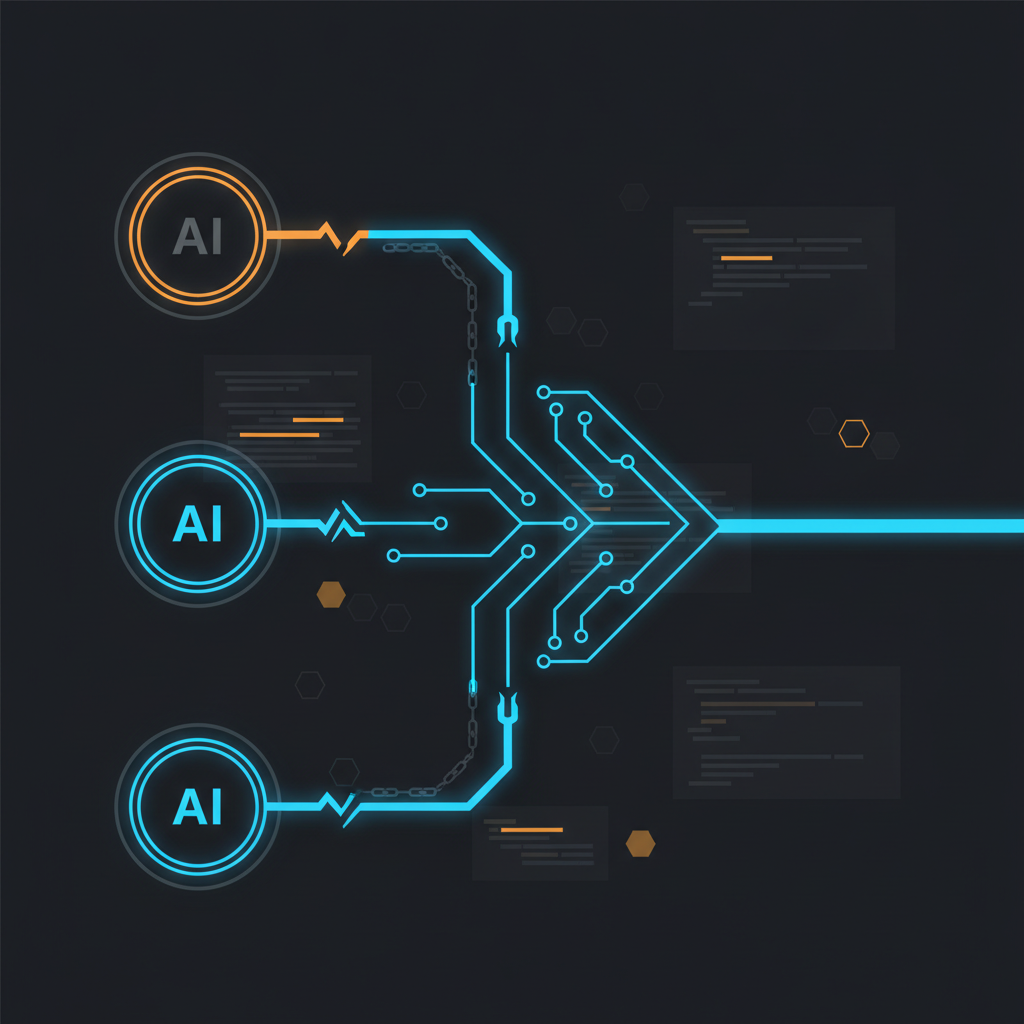
Table of Contents
On June 16, 2026, SpaceX filed a Form 8-K with the SEC formalizing its $60 billion all-stock acquisition of Anysphere — the company behind Cursor, the AI-native code editor that became the most credible independent challenger to GitHub Copilot. The deal is expected to close in Q3 2026 pending regulatory approval. By market cap impact alone, SPCX jumped roughly 17 percent the same day, pushing SpaceX above Amazon and Microsoft to become the fourth most valuable US company.
The financial story is big. The enterprise architecture story is bigger, and almost nobody is telling it.
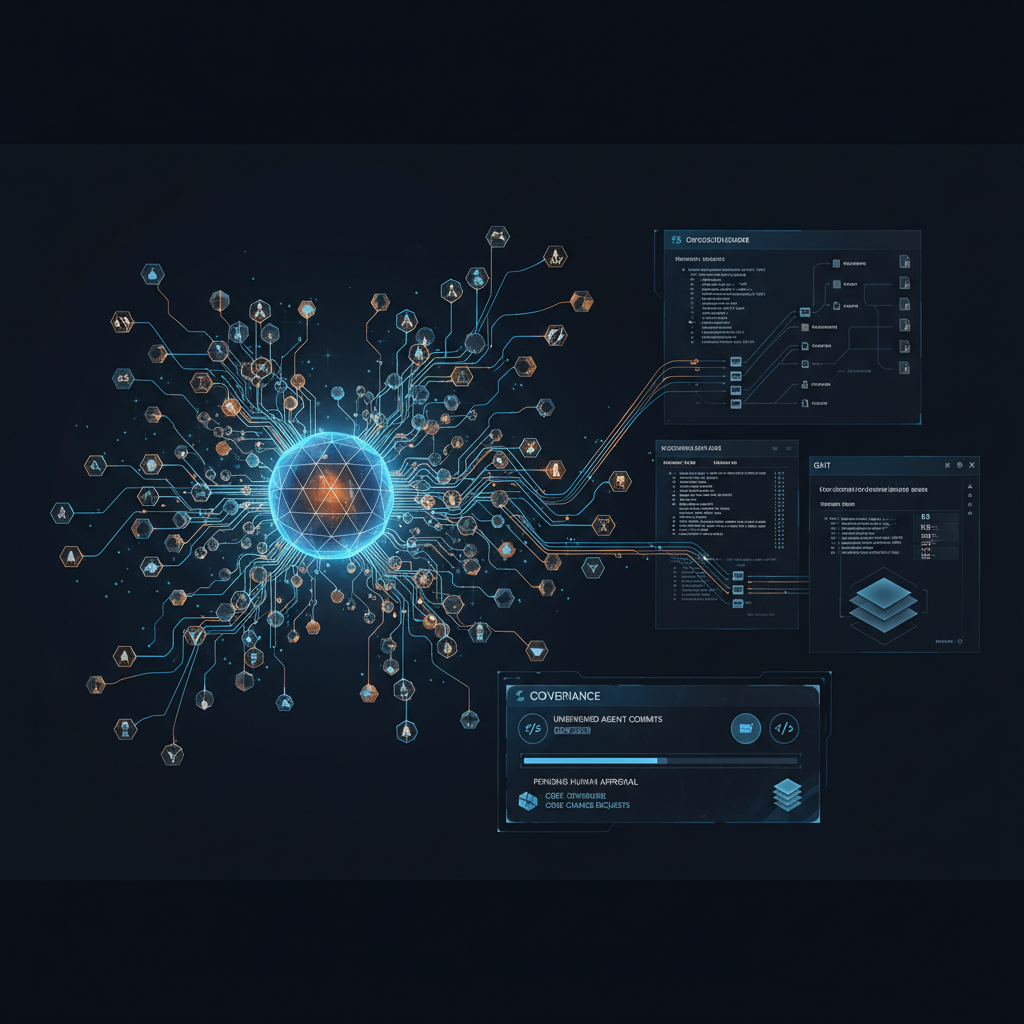
Cursor was the last major AI coding platform with genuine model neutrality. It supported Claude, GPT-5.5, Gemini, and its own Composer model — and let enterprise teams route between them based on task type, cost, or output quality. That architecture was not an accident. It was Cursor’s core competitive differentiator against tools that were vertically integrated with a single AI vendor. Under SpaceX, that architecture has an expiration date. SpaceX’s AI arm (the entity formed after xAI merged with SpaceX in February 2026) has already been jointly training a model with Cursor on Colossus infrastructure, according to Cursor CEO Michael Truell. The transition from “we support multiple models” to “we run our model by default” is a question of when, not whether.
Every enterprise team that built an agentic coding workflow, a CI/CD pipeline, or an automated code review agent in Cursor just inherited a vendor lock-in risk they didn’t plan for. The good news is there’s a clean architecture pattern that limits the blast radius. The bad news is most teams haven’t built it yet.
Architecture Impact
What changes in system design?
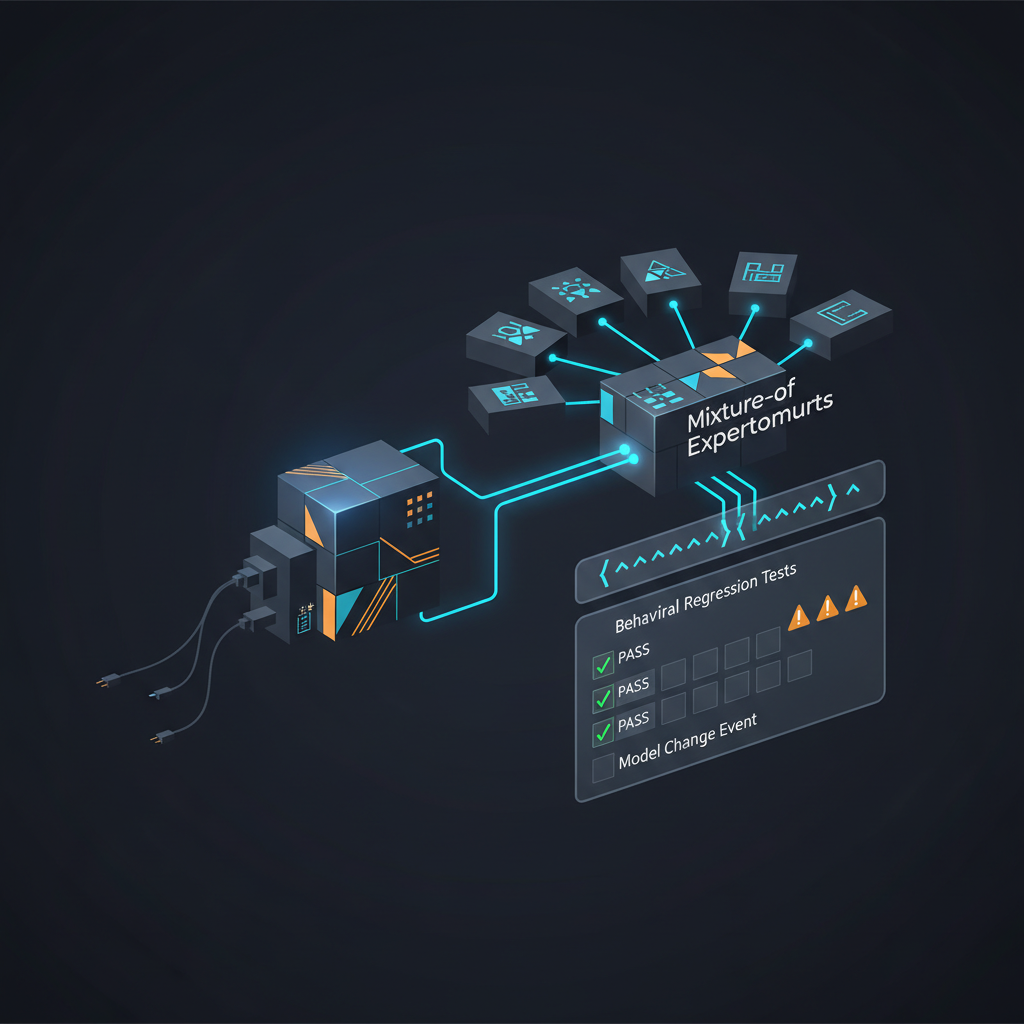
The Cursor acquisition converts a model-routing abstraction layer into a single-vendor dependency. Enterprise teams currently using Cursor in agentic CI/CD pipelines — automated PR review, test generation, refactoring agents, code migration workers — have likely hard-coded Cursor-native APIs, Cursor’s agent primitives, or Cursor’s multi-model routing calls. When SpaceX shifts Cursor toward its Colossus-trained joint model as default, any pipeline that relied on Claude or GPT-5.5 being the underlying model will encounter behavioral regression without warning. The model routing change happens inside Cursor’s SDK, invisible to a CI system that measures only pass/fail.
What new failure mode appears?
Silent behavioral regression on model substitution. This is the same failure mode that GitHub Copilot teams hit in August when Project Polaris replaced GPT-4 — except Cursor users won’t have the three-month fallback period that Microsoft built in. SpaceX has no enterprise-first culture constraint pushing it toward graceful migration paths. The failure shows up in code review agents that start accepting patterns they previously flagged, automated test generators that produce tests with subtly different coverage semantics, and refactoring agents that change coding conventions to match the new model’s training data distribution. None of these failures generate error messages. They generate drift.
What enterprise teams should evaluate:
- MLOps / AI Platform teams: Audit which Cursor-powered agents have hardcoded model selection vs. abstracted routing. Build a behavioral regression baseline now, before SpaceX ships the first model change.
- Security teams: Cursor’s multi-model design meant security-critical code review agents could run Claude or GPT-5.5 models that have published safety properties and known behavior profiles. A new SpaceX/xAI model has no public safety evaluation track record for enterprise code review. Assess the unknown-model risk against your threat model.
- Engineering leadership: If your team is on Cursor Business or Enterprise, identify the contract terms around model substitution notification. Microsoft gives 90-day notice on Copilot model changes. Check whether your Cursor agreement has equivalent protections — and whether they survive the SpaceX acquisition.
Cost / latency / governance / reliability implications:
SpaceX/xAI’s Colossus infrastructure prioritizes raw throughput for Grok training, not the low-latency, consistent-tail-latency properties that enterprise coding agents require for CI/CD integration. The joint Cursor-Colossus model is being optimized for “the world’s most useful AI models” (SpaceX’s stated goal) — not for sub-300ms autocomplete and deterministic batch refactoring. Enterprise teams running Cursor at scale should expect a 12–18 month period of model transition instability, during which latency profiles, context window behavior, and instruction-following consistency may shift across software updates. This is not speculation; it is the observed pattern in every major AI coding tool that has undergone a foundational model switch.
What This Means for Developers
The developer experience changes are already beginning, and the Cursor transition is happening against a backdrop of broader AI coding tool platform consolidation that is accelerating in June 2026. The same week SpaceX announced the Cursor acquisition, Google retired its Gemini CLI and replaced it with the Antigravity CLI — a non-open-source replacement that consolidates Google’s AI coding surface into a single controlled distribution channel. The pattern is clear: every major AI coding tool is being absorbed into a platform with a single-vendor model strategy.
For individual developers, the near-term impact of the Cursor acquisition is low. Cursor will ship the same interface, the same keyboard shortcuts, and the same editor integrations for months. The model change will be gradual, likely starting with the Cursor-trained model as an opt-in default, then becoming the default model for new users, then eventually the only first-class option. Anthropic, OpenAI, and Google model support will not disappear immediately — but the integration quality, context window support, and optimization investments will diverge over time. The jointly trained SpaceX-Anysphere model will be the model that gets the longest context, the best instruction tuning, and the deepest IDE integration. That is what “the most useful AI models” means in practice.
For developers who have built automation on Cursor’s API — agent workflows, batch refactoring scripts, automated code review pipelines — the migration risk is more immediate. SpaceX inherits Anysphere’s API surface, but enterprise API contracts in M&A scenarios are notoriously unstable in the 12–18 months post-close. Rate limits change, pricing tiers change, and model IDs that were reliable become deprecated. Now is the time to add an abstraction layer between your agent orchestration code and the Cursor-specific API primitives, while the current API surface is still stable. The Cursor API documentation from today is the baseline to code against, not the baseline that will exist in Q1 2027.
The Cursor acquisition also closes a competitive option that enterprise teams have quietly used as a negotiating lever: “we can move to Cursor if Microsoft/Anthropic/OpenAI pricing becomes unacceptable.” That option is gone. Cursor’s independent pricing history will no longer constrain SpaceX’s eventual enterprise pricing decisions. If you are renewing or negotiating an AI coding tool enterprise agreement in Q3–Q4 2026, the Cursor acquisition has reduced your walk-away alternatives by one.
The Business Case
Cursor entered the acquisition with $4 billion in ARR — roughly four times the $1 billion ARR it disclosed in November 2025. At $60 billion, SpaceX paid approximately 15x ARR, aggressive but defensible for a high-growth developer tool. For comparison, Microsoft acquired GitHub at roughly 25x ARR in 2018. The valuation math makes sense for SpaceX if Cursor’s ARR continues to grow at its current pace and if the SpaceX/xAI model substantially outperforms Claude and GPT-5.5 on coding tasks.
The catch is that Cursor’s market share had already peaked and was declining: from 41% of AI coding tool users in June 2025 to approximately 26% by May 2026, per Ramp spending data. This is the “growth despite share loss” pattern — Cursor was growing revenue as the overall market grew, but losing ground to Claude Code in enterprise adoption. The Ramp AI Index for May 2026 showed Anthropic overtook OpenAI in US business AI adoption for the first time, driven primarily by Claude Code adoption in enterprise software teams. Cursor was already losing the enterprise segment before the acquisition.
For enterprise AI budget holders, this creates a short-term opportunity and a long-term risk. The short-term opportunity: negotiate Cursor enterprise contracts now, before the Q3 close, while Anysphere’s independent enterprise sales team is still running its pre-acquisition pricing model. SpaceX will reset enterprise pricing post-close to reflect both the higher Colossus inference costs and the strategic value of the Cursor distribution channel. The long-term risk: any enterprise commitment made today is a commitment to a product whose roadmap, model strategy, and pricing architecture will be determined by SpaceX’s AI ambitions — which are primarily about competing with Anthropic and OpenAI at the frontier, not about serving mid-market enterprise software teams.
The consolidation of the AI coding market has one straightforward implication for enterprise procurement: multi-vendor coding AI strategies are now structurally necessary, not optional. With Copilot (Microsoft), Claude Code (Anthropic), Codex plus Windsurf (OpenAI), and now Cursor (SpaceX) all locked to their respective model ecosystems, any enterprise that relies on a single AI coding tool is implicitly locked to that vendor’s model roadmap, pricing decisions, and business continuity. The only independent major enterprise option is Tabnine, which maintains on-premise deployment and model-neutral architecture. Expect Tabnine’s enterprise sales motion to get more aggressive over the next two quarters as every enterprise team that valued Cursor’s model neutrality starts evaluating alternatives.
The SuperML Take
The SpaceX-Cursor acquisition will be written about as a financial event — $60 billion, all-stock, biggest AI software deal in history, SPCX up 17%, SpaceX becomes the fourth most valuable US company in a single session. Those are genuinely remarkable numbers. But for enterprise AI practitioners, the acquisition is an infrastructure event, and the infrastructure story has been in motion since early 2026.
What SpaceX actually bought was distribution to enterprise software teams at scale. Cursor had $4 billion in ARR and approximately 4–6 million active developers. That distribution — a captive audience of professional developers building production software — is the strategic asset that justified $60 billion. Not the code, not the infrastructure, not the IDE. The distribution. And the plan for that distribution is straightforward: gradually shift developers from Claude/GPT-5.5/Gemini as the underlying Cursor models to the SpaceX/xAI jointly trained model, capturing the inference revenue and training data feedback loop that currently flows to Anthropic, OpenAI, and Google.
This is the second time in twelve months that a model-neutral, multi-vendor AI developer tool has been absorbed into a single-vendor AI stack. Windsurf (acquired by OpenAI earlier in 2026) was the first. Cursor is the second. The pattern is not coincidental — it reflects the strategic logic of every major AI lab. The inference revenue from being the underlying model in a developer tool is substantial and growing. The training data feedback loop from watching how expert developers use your model is irreplaceable. Every large AI vendor needs a developer tool that funnels professional developer usage back into their model training pipeline. Model-neutral platforms, by definition, fragment that feedback across vendors — which is commercially indefensible from any single vendor’s perspective.
Here is what a senior AI engineer should actually do with this information: first, audit which of your team’s CI/CD pipelines and agentic coding agents have implicit model assumptions baked in through Cursor APIs. If you can’t enumerate them in thirty minutes from a codebase search, you don’t know your model dependency surface. Second, if those workflows are running on Cursor-native primitives, build the abstraction layer now. The cost of abstracting today is two to four engineer-weeks. The cost of a silent behavioral regression discovered during a production incident after the SpaceX model switch is orders of magnitude higher. Third, treat the Cursor acquisition as confirmation of a structural market dynamic, not an isolated event: every major AI coding tool is now owned by an AI lab, and every AI lab’s interests are aligned with maximizing their model’s usage, not with preserving your platform flexibility.
The AI coding market has consolidated faster than any developer tool market in software history. GitHub took seven years to get acquired. Cursor took two. The next acquisition will probably take less than one. That compression of timeline is a signal about how much the AI labs value distribution — and how little time enterprise architecture teams have to plan before the market moves underneath them again.
Sources
- CNBC: SpaceX to Acquire the AI Coding Startup Cursor for $60 Billion (June 16, 2026)
- TechCrunch: SpaceX to Acquire Cursor for $60B in Stock, Days After Blockbuster IPO (June 16, 2026)
- Basenor: SpaceX Acquires Cursor AI for $60 Billion in All-Stock Deal (June 16, 2026)
- Build Fast with AI: AI News Today – June 17, 2026 (June 16, 2026)
- Ramp AI Index – May 2026 Business AI Adoption Data
- Google Developers Blog: Transitioning Gemini CLI to Antigravity CLI
- TradingKey: SpaceX SPCX Cursor ARR $4B Acquisition Analysis (June 16, 2026)
Enterprise AI Architecture
Want more enterprise AI architecture breakdowns?
Subscribe to SuperML.