When Your Coding Agent Tops GitHub, Who Governs What It Ships to Production?
Claude Code is now authoring 4% of all public GitHub commits. Opus 4.8's Dynamic Workflows can migrate entire codebases with hundreds of parallel subagents. The governance gap is no longer theoretical.

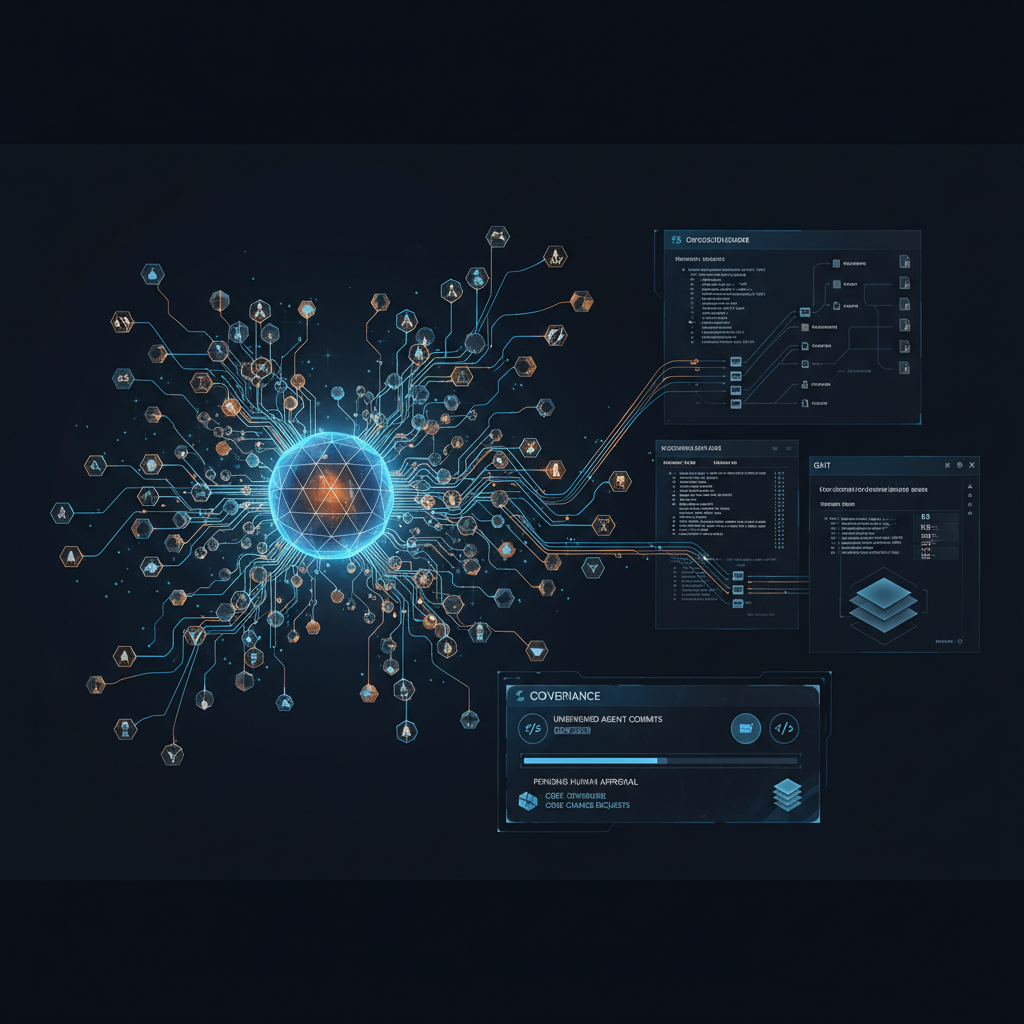
Table of Contents
On May 28, Anthropic shipped two things simultaneously: a $65 billion Series H at a $965 billion valuation, and a model update that added something far more architecturally interesting than a benchmark bump. Claude Opus 4.8 introduced Dynamic Workflows — a feature that lets Claude Code spin up hundreds of parallel subagents in a single session to execute codebase-scale migrations from kickoff to merge, using the existing test suite as its acceptance bar. Quietly, this made Claude Code something it wasn’t before: a system that can autonomously restructure production software at scale.
On the same day, Ramp’s May AI Index landed with a data point that should be making enterprise AI governance teams uncomfortable. Anthropic had overtaken OpenAI in business AI adoption for the first time — 34.4% of businesses vs. OpenAI’s 32.3%. The driving force wasn’t Opus 4.7’s benchmark scores or the $65B raise. It was Claude Code, which Anthropic says is now responsible for 4% of all public GitHub commits worldwide.
Four percent of GitHub. That’s not a product success metric. That’s a production AI footprint.
Architecture Impact
What changes in system design?
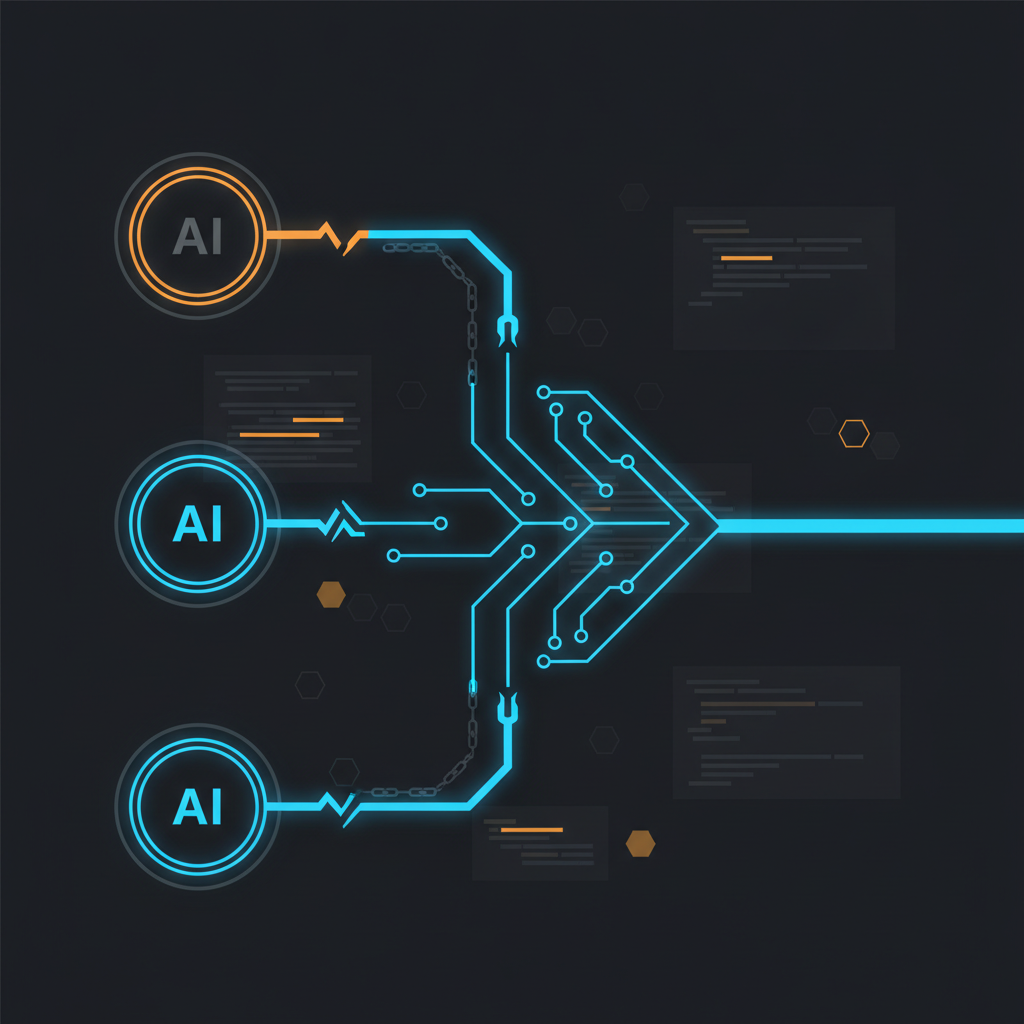
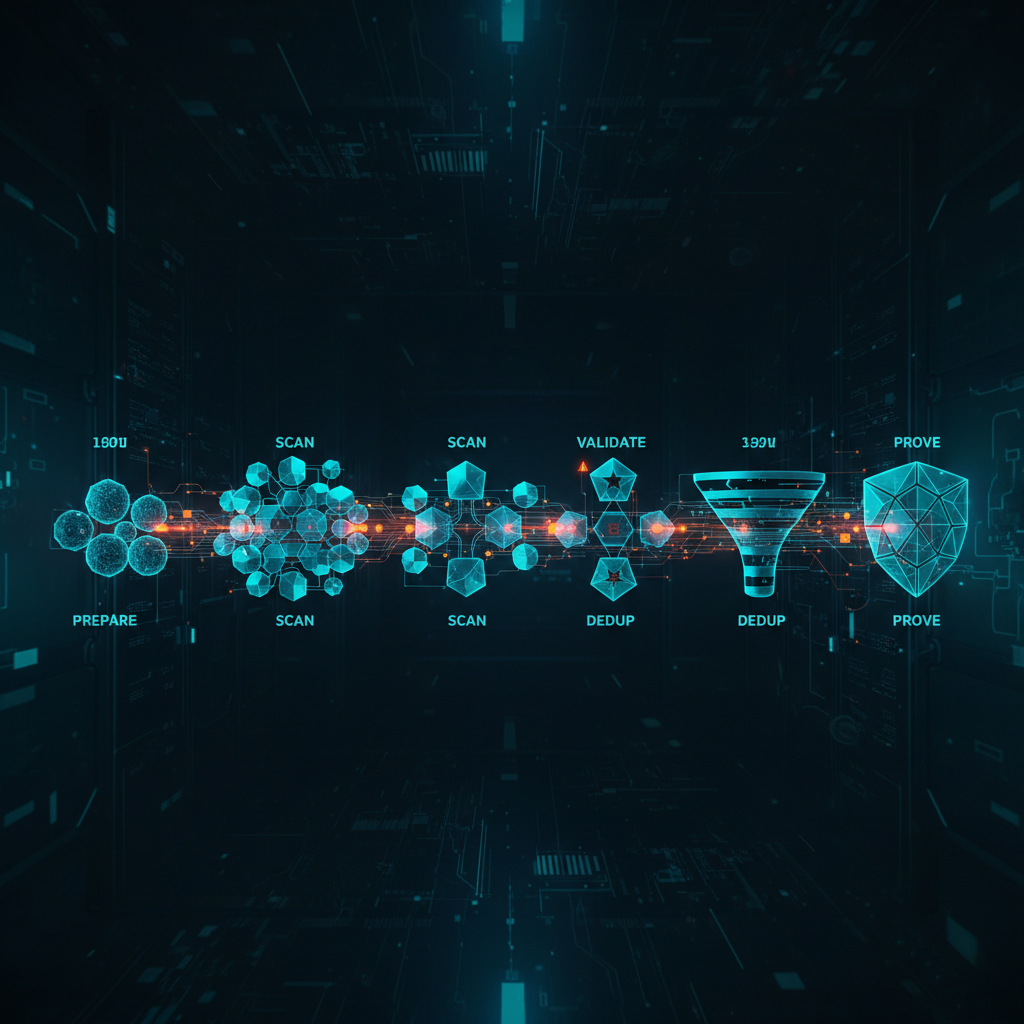
Dynamic Workflows fundamentally changes Claude Code from an interactive coding assistant into an asynchronous, large-scale code transformation system. Where previous versions required tight human-in-the-loop interaction for complex tasks, Dynamic Workflows lets an engineer kick off a codebase-wide migration — say, upgrading a Java 11 codebase to Java 21 across 300,000 lines — and have Claude Code orchestrate hundreds of parallel subagents that plan, execute, validate, and loop back before surfacing a result. The critical architectural shift: Claude Code is now a job scheduler, not just a chat interface.
The Messages API now also accepts system entries inside the messages array mid-task — meaning developers can update permissions, token budgets, and environment context as an agent runs without breaking prompt cache. This makes it technically possible to build runtime governance policies that evolve as a long-running task progresses. In theory. In practice, this capability is currently far ahead of most enterprises’ runtime governance tooling.
What new failure mode appears?
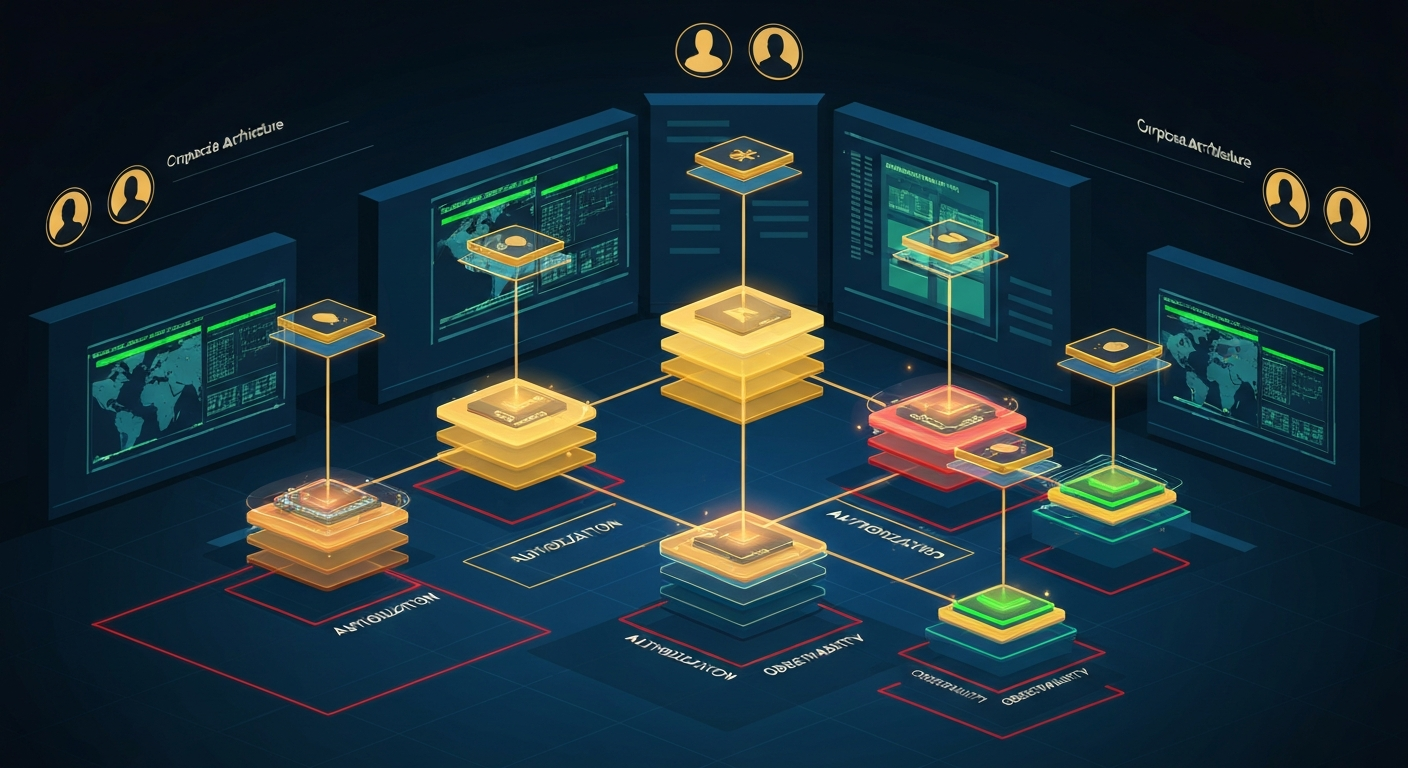
The most dangerous failure mode isn’t a wrong line of code — it’s a wrong architectural decision made at speed without a reviewer who can catch it. When Claude Code runs 400 parallel subagents across a migration, it makes hundreds of micro-decisions about how to structure code, where to introduce abstractions, which patterns to follow. Each individual decision may look reasonable in isolation; the aggregate can introduce a new dependency pattern, a security surface, or a data access structure that violates existing architecture standards. By the time a human reviews the final PR, the structural decisions have already compounded across the entire codebase.
The second failure mode is cost. Uber’s CTO publicly announced the company blew through its entire 2026 AI budget on Claude Code — and that was before Dynamic Workflows existed. Agentic workflows running hundreds of subagents at $25/M output tokens are an entirely different cost class from interactive use. Enterprises without token governance policies at the job-scheduler level, not just the user level, will hit financial surprises.
What enterprise teams should evaluate:
- Platform/architecture teams: Audit whether existing PR review processes are designed to catch pattern-level architectural drift from large agent-generated PRs, not just line-level correctness.
- FinOps/AI cost teams: Build per-project token budget policies and hard stops for agentic jobs before Dynamic Workflows enters production workloads. Interactive use and job-scale agentic use need fundamentally different cost governance models.
- Security/AppSec teams: Assess what happens to your threat model when code spanning multiple services is generated by an agent that holds context across all of them simultaneously.
Cost / latency / governance / reliability implications:
Opus 4.8 fast mode is now 3x cheaper than fast mode for previous models ($10/M input, $50/M output), which helps for interactive use. But Dynamic Workflows multi-agent runs at xhigh effort are a different calculation entirely. Anthropic notes that Opus 4.8 is “around four times less likely than its predecessor to allow flaws in code it has written to pass unremarked” — a meaningful quality improvement for long-running autonomous runs where human checkpoints are infrequent. That said, for regulated industries with material change governance requirements, the question isn’t whether the code quality is higher. It’s whether autonomous architectural decisions at scale are compatible with existing change control obligations at all.
What to Watch
The adoption flip from OpenAI to Anthropic in Ramp’s data is real, but Ramp’s own economist flagged three headwinds worth watching. Anthropic’s token-cost incentives are structurally misaligned with enterprise cost-cutting goals: Anthropic makes more money when businesses consume more tokens, creating an incentive to push users toward more expensive models even when cheaper ones suffice. Claude experienced documented quality degradation complaints in April before a SpaceX compute deal resolved the immediate capacity crunch. And reportedly, new Opus 4.8 image prompt handling 3x token costs for any prompt containing an image — a sign that the product roadmap may be prioritizing capability over enterprise cost predictability.
The competitive response from OpenAI matters here too. Codex is narrowing the agentic coding gap, runs more cheaply on many tasks, and has minimal switching costs for teams not deeply embedded in Claude-specific workflows. The SWE-Bench Pro gap (Opus 4.8 at 69.2% vs. comparable Codex capability) is real but shrinking. In 6-12 months, the most interesting enterprise case studies won’t be about which model scored higher — they’ll be about which vendor’s governance, cost controls, and audit tooling actually fit how enterprise teams need to operate at scale.
Mythos-class models are also on the near-term horizon. Anthropic expects general availability within weeks after resolving remaining cybersecurity safeguards through Project Glasswing. If Mythos delivers significantly higher agentic reliability at controlled cost, the Dynamic Workflows architecture becomes considerably more compelling — and the governance problem considerably more urgent.
The SuperML Take
The way this story is being covered — “Anthropic beats OpenAI in enterprise adoption” — is a fine data point and a terrible frame. The actually interesting thing isn’t the adoption leaderboard. It’s that an AI system is now writing a statistically significant share of global production code, and most enterprises have governance frameworks designed for code written by humans, reviewed by humans, with deterministic authorship.
Dynamic Workflows is the moment Claude Code graduates from productivity tool to production system. A productivity tool helps a developer write faster. A production system makes autonomous decisions that compound across an entire codebase. These require different trust models, different review processes, and different risk frameworks. The fact that Anthropic is shipping this capability alongside a 69.2% SWE-Bench Pro score and a “4x less likely to let code flaws pass unremarked” claim is encouraging on the quality front. But production code quality and production code governance are not the same thing.
The specific risk that keeps getting missed: at scale, agentic code generation makes architectural decisions, not just implementation decisions. When Dynamic Workflows runs hundreds of subagents across a codebase migration, the agents are collectively choosing where to draw abstraction boundaries, how to refactor shared utilities, and which patterns to propagate. These are the decisions that matter most in a production codebase — and they’re currently happening at a layer below where most enterprise code review processes operate.
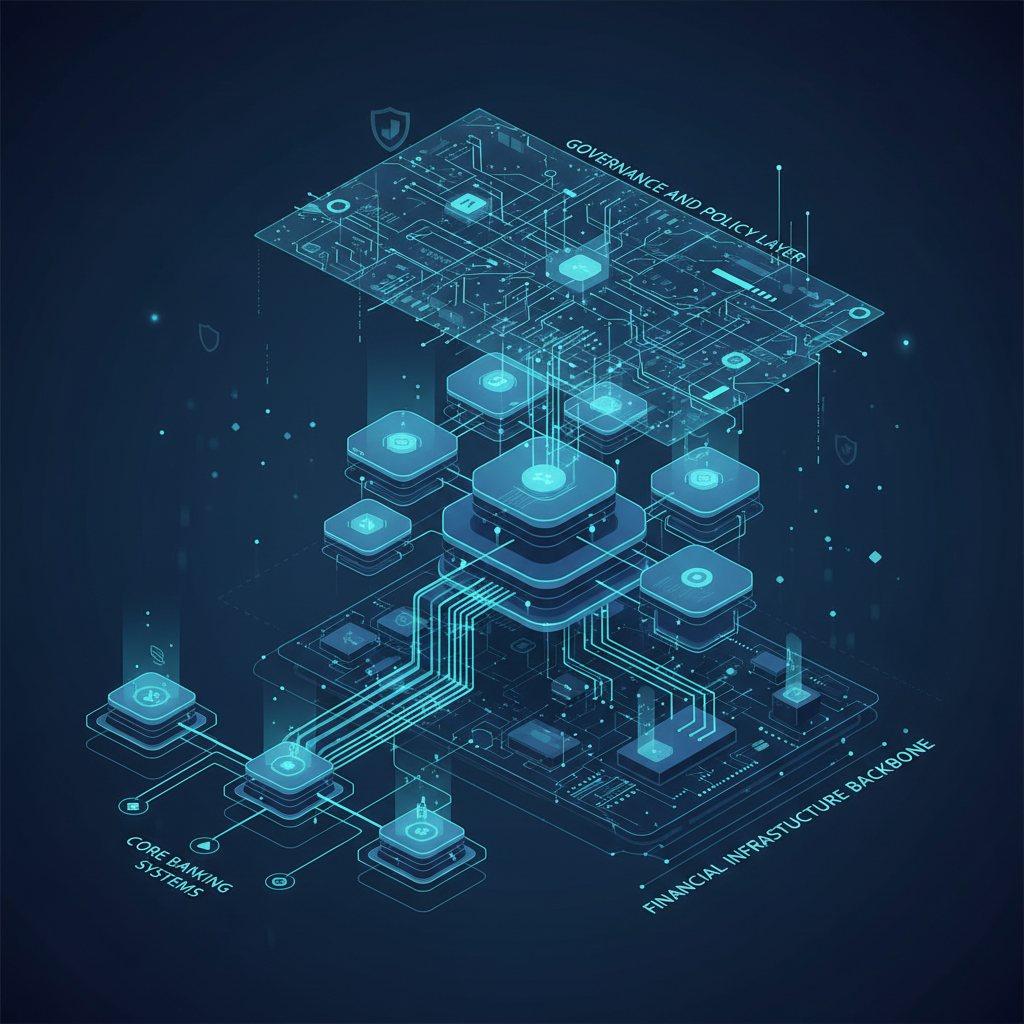
For regulated industries, the question is even sharper. Banking code changes in production systems often require documented rationale, human sign-off at specific approval levels, and audit trails that satisfy regulators. “An AI agent decided this during a multi-agent migration run” is not currently an acceptable entry in most regulated change control systems. SR 26-2’s carve-out of generative and agentic AI from formal model risk governance means there’s no regulatory framework requiring banks to answer this question yet — but that gap is temporary. The RFI is coming, and the institutions that have built governance for agentic code changes will be ahead of it.
What should senior ML engineers and AI-forward CTOs actually do with this? Not avoid Dynamic Workflows — the capability is genuinely valuable and the quality improvements in Opus 4.8 are real. Instead: instrument before you deploy. Get per-project token budgets in place. Ensure your PR review tooling is calibrated for large agentic changesets, not just individual commits. Build policy for what categories of code change require human architectural review regardless of agent confidence. Start collecting the audit trail data now that regulated industries will eventually be required to produce. The governance infrastructure for agentic coding is about six months behind the capability. That gap will not close itself.
Sources
- Introducing Claude Opus 4.8 — Anthropic, May 28, 2026
- Anthropic raises $65B in Series H funding at $965B post-money valuation — Anthropic, May 28, 2026
- Ramp AI Index: Anthropic beats OpenAI on business adoption — Ramp Economics Lab, May 2026
- Claude’s next enterprise battle is not models: it’s the agent control plane — VentureBeat
- Anthropic finally beat OpenAI in business AI adoption — but 3 big threats could erase its lead — VentureBeat
Enterprise AI Architecture
Want more enterprise AI architecture breakdowns?
Subscribe to SuperML.