Copilot Drops GPT-4 for Polaris — What Changes for Enterprise Dev Pipelines
Microsoft just announced at Build 2026 that GitHub Copilot will replace GPT-4 Turbo with its own homegrown Polaris model in August — and enterprise teams running agentic coding workflows need to treat this as a model substitution event, not a feature upgrade.

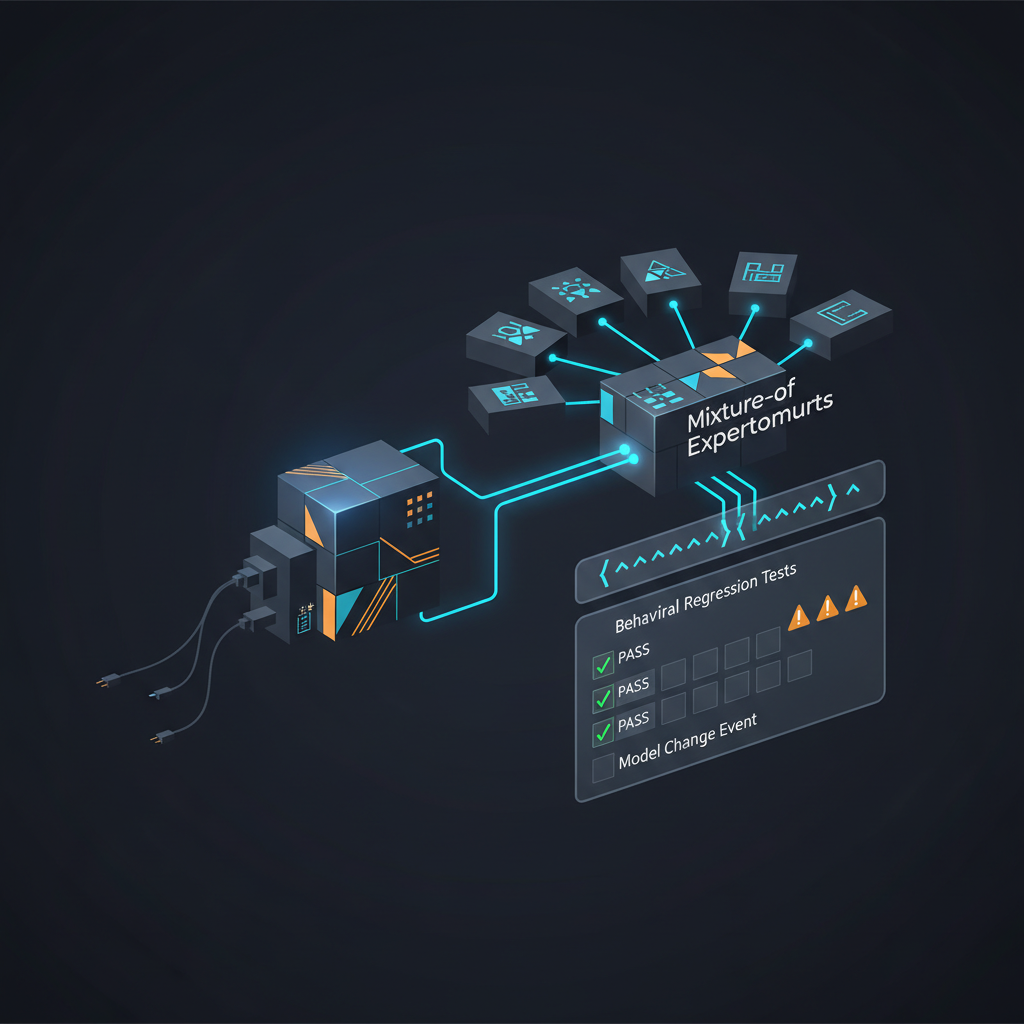
Table of Contents
Microsoft Build 2026 is running today in San Francisco, and the headline from the developer track isn’t the Windows Agent Store or Azure Agent Mesh — though both matter. It’s Project Polaris: Microsoft’s own homegrown AI model, built to replace GPT-4 Turbo as the default engine inside GitHub Copilot starting August 2026.
If you’re reading this as a release note about a better autocomplete, you’re reading it wrong. Polaris is a mixture-of-experts architecture with specialized sub-modules tuned per programming language. It will behave differently from GPT-4 Turbo — on some dimensions better, on others different enough to break expectations. And unless your enterprise team explicitly opts into the three-month fallback period before the cutover, every developer’s coding assistant changes model automatically.
The timing matters. Copilot has become a production tool in ways its 2021 GitHub announcement never anticipated. Teams are running it in CI/CD review gates, using it for code generation in agentic pipelines, and embedding it in developer workflows where the output of one completion seeds the next. A model swap in that context is not a feature upgrade. It’s a behavioral regression event.
What This Means for Developers
The most immediate impact is on Copilot users who have calibrated their workflows to GPT-4 Turbo’s behavior — particularly its verbosity patterns, its tendency to add inline documentation, its handling of ambiguous function signatures, and how it deals with multi-file context. Polaris was trained with different objectives: Microsoft’s internal benchmarks show gains on HumanEval and MBPP, with particular wins in lower-resource languages like Rust and Haskell. But “scores better on benchmarks” and “behaves identically in your pipeline” are different claims.
The practical change for individual developers is that Polaris runs on Microsoft’s custom Maia AI accelerators inside Azure, which Microsoft says reduces per-inference latency. That means completions should feel faster. However, chain-of-thought search at inference time is enabled for complex multi-file tasks — meaning some tasks that were previously fast but shallow will now be slower but deeper. The distribution of latency is changing, not just the average.
For teams on annual Copilot plans, the automatic migration to Polaris happens in August regardless of billing cycle. The three-month GPT-4 fallback period exists, but Microsoft is not prominently advertising it. If you want it, your GitHub organization admin needs to request it before the cutover — check GitHub’s enterprise settings in July.
For developers using Copilot in agentic mode (multi-step workflows, CLI automation, VS Code agent mode), the risk is higher. Polaris’s chain-of-thought at inference means longer sessions may produce structurally different output patterns than GPT-4 Turbo. If you have prompts or templates hardened to GPT-4 response shapes, test them on Polaris in the preview period before August.
Architecture Impact
What changes in system design?
Polaris is not just a model swap for individual developer assistants — it lands alongside the Windows Agent Framework v1.0, Azure Agent Mesh, and AgentGuard, all announced at Build 2026. Together, these represent Microsoft shifting from being a platform that hosts AI models to being a platform that is the AI agent execution environment. Azure AI Foundry now supports heterogeneous agent teams mixing Semantic Kernel, LangChain, and vanilla REST APIs under one orchestration plane. The Agent-to-Agent (A2A) and MCP protocols are built in. This is an enterprise architecture platform play.
What new failure mode appears?
The canonical new failure is model substitution silent regression — where a coding pipeline’s behavior shifts in August not because of any code change your team made, but because the underlying model changed. Agentic coding workflows that have accumulated implicit behavioral expectations of GPT-4 Turbo (specific output formats, comment patterns, test generation behavior) will produce different output after August with no alert. If you don’t have regression suites that test Copilot output as a distinct artifact, you will not catch this until something downstream breaks.
The Azure Agent Mesh introduces a second failure mode: distributed agent routing. The Mesh federates execution across on-premises Windows servers, Windows 365 Cloud PCs, and Azure Arc edge devices. Routing is latency- and GPU-availability-based — which means the model (Polaris) and the execution node can be different per request, and behavioral consistency across a distributed agent fleet is now an assumption you have to validate rather than a given.
What enterprise teams should evaluate:
- Platform engineering teams: Audit every CI/CD pipeline, review gate, and automated workflow that calls Copilot API or CLI. Determine which have hardened expectations of GPT-4 output format. Build a Polaris preview run before August.
- Security and AppSec teams: AgentGuard (Microsoft’s new governance preview) provides role-based permissions, DLP, and audit logging across agent interactions — evaluate whether this replaces or supplements your existing AI guardrails, since the governance layer is still preview and won’t be GA until Q4.
- ML engineering / AI governance teams: This is a vendor-initiated model substitution event. For teams in regulated industries (banking, healthcare, insurance) that have compliance requirements around model provenance and validation, check whether your SR 26-2 or EU AI Act documentation references GPT-4 Turbo specifically. If so, Polaris triggers a re-validation event.
Cost / latency / governance / reliability implications:
Maia accelerator-based inference should be 15–25% faster for standard completions. Multi-file agentic tasks with chain-of-thought enabled will have higher latency than Copilot’s current GPT-4 Turbo baseline — Microsoft has not published P95 numbers for these. On cost, Polaris is included in existing Copilot subscription plans with no pricing change, but AI Credits consumption (post June 1 metered billing) will be affected by the chain-of-thought overhead on complex tasks. Budget modeling that assumed a stable per-completion cost from the old billing period needs to be revised.
The SuperML Take
Let’s be direct about what’s actually happening here. Microsoft built Polaris specifically to displace Claude Code’s growing share of the enterprise developer market. The company named Anthropic’s tool explicitly as the competitive threat at a public developer conference — which is a remarkable thing to do and tells you something about how much attention Claude Code’s 4% GitHub commit share is getting in Redmond.
The question enterprise teams should be asking is not “is Polaris better than GPT-4?” It’s “what does it mean that my developer AI platform is now vertically integrated from model to execution environment to governance layer?” Azure AI Foundry, Windows Agent Framework, Agent Mesh, AgentGuard, Copilot, and now Polaris are a stack. They interoperate cleanly. They run on Microsoft’s own silicon. They are governed by Microsoft’s own compliance tooling. The dependencies go very deep.
For teams that have been intentionally maintaining model-provider independence — running LLM gateways, abstracting model providers, keeping Copilot calls replaceable — the Build 2026 stack represents pressure in the other direction. The developer experience of a fully integrated Microsoft agent platform will be genuinely good. The switching costs after two years of deep adoption will also be genuinely high.
The Polaris rollout is also a test of enterprise AI governance maturity. Teams that have treated Copilot as a developer convenience tool with no formal change management process are about to discover that their AI toolchain has vendor-initiated model substitution as a feature, not a bug. The three-month fallback period is a grace window. The question is whether your team has the processes in place to use it intelligently — baseline Polaris behavior in preview, compare against GPT-4 Turbo on your specific workflows, make a deliberate choice rather than accepting the automatic migration.
Six months from now, the conversation at enterprises won’t be about Polaris’s benchmark scores. It will be about whether the Windows Agent Framework and Azure Agent Mesh adoption decision, which will feel easy and fast in Q3 2026, created the kind of platform concentration risk that takes years to unwind. That’s the real story from Build 2026, and it didn’t make the keynote headline.
Sources
- Build 2026: Microsoft Unleashes AI Agents Across Office 365, Windows, and Azure
- GitHub Copilot Replaces GPT-4 With Project Polaris, Ships Multi-Agent VS Code at Build
- Microsoft Build 2026 Recap: Windows Is Now an Agent Platform, and Project Polaris Cuts the OpenAI Cord
- Microsoft Targets Claude Code with Project Polaris
- Microsoft Build 2026: Windows Agent Framework, WSL 3, Azure Agent Mesh, and Windows Agent Store Explained
- Microsoft Agent Framework at BUILD 2026
- Microsoft Build 2026: Homegrown AI Models to Power GitHub Copilot
- Azure AI Foundry: Your AI App and Agent Factory
Enterprise AI Architecture
Want more enterprise AI architecture breakdowns?
Subscribe to SuperML.