When Three Big Four Firms Standardize on Claude, Governance Becomes the Product
Deloitte, PwC, and KPMG have committed 1.1M professionals to Claude Managed Agents within 60 days of each other. The benchmark race is over. The governance race just started.

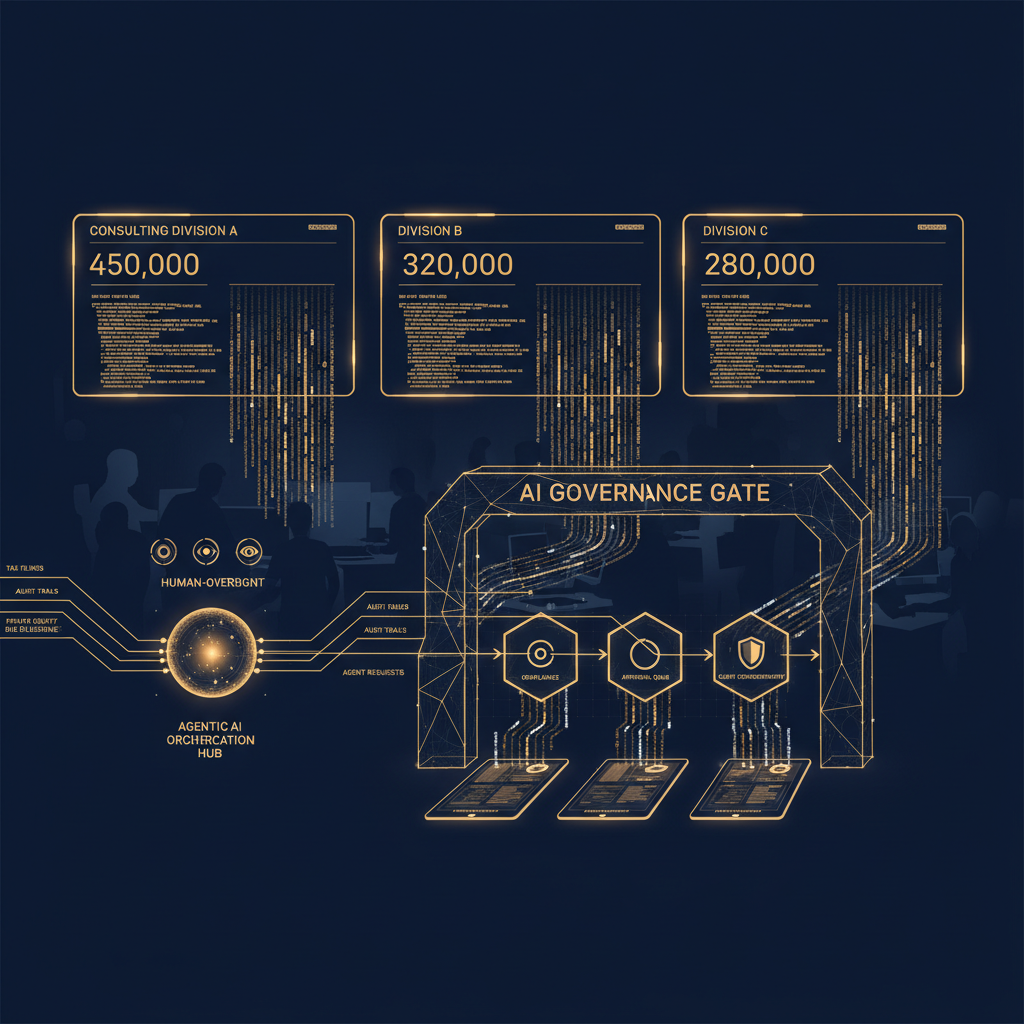
Table of Contents
Sometime in the last sixty days, a pattern emerged that the AI industry will be studying for years. Deloitte committed its entire global workforce of approximately 470,000 professionals to Claude. PwC followed with a global alliance covering its global professional services workforce, cutting insurance underwriting from 10 weeks to 10 days and security task time by up to 70%. Then KPMG announced on May 19 that it had signed a global alliance with Anthropic, deploying Claude to 276,000 professionals across 138 countries as the core AI engine inside Digital Gateway — KPMG’s primary client delivery platform.
Three of the four largest professional services firms. One model. Combined, somewhere north of 1.1 million professionals. All of them running Claude Managed Agents in workflows that touch audit opinions, tax filings, private equity due diligence, legal reviews, and consulting deliverables that their clients rely on to make decisions worth billions of dollars. All of this within roughly two months.
Most of the AI industry conversation about this cluster of announcements has focused on what it means for Anthropic’s distribution — and it does mean a great deal, since Big Four firms collectively serve the Fortune 500, the Global 2000, and most major governments, creating an implicit Claude endorsement that reaches client organizations who never made their own AI procurement decision. That’s a real story. But it’s the second most important story.
The first most important story is governance. And nobody is really talking about it yet.
Architecture Impact
What changes in system design?
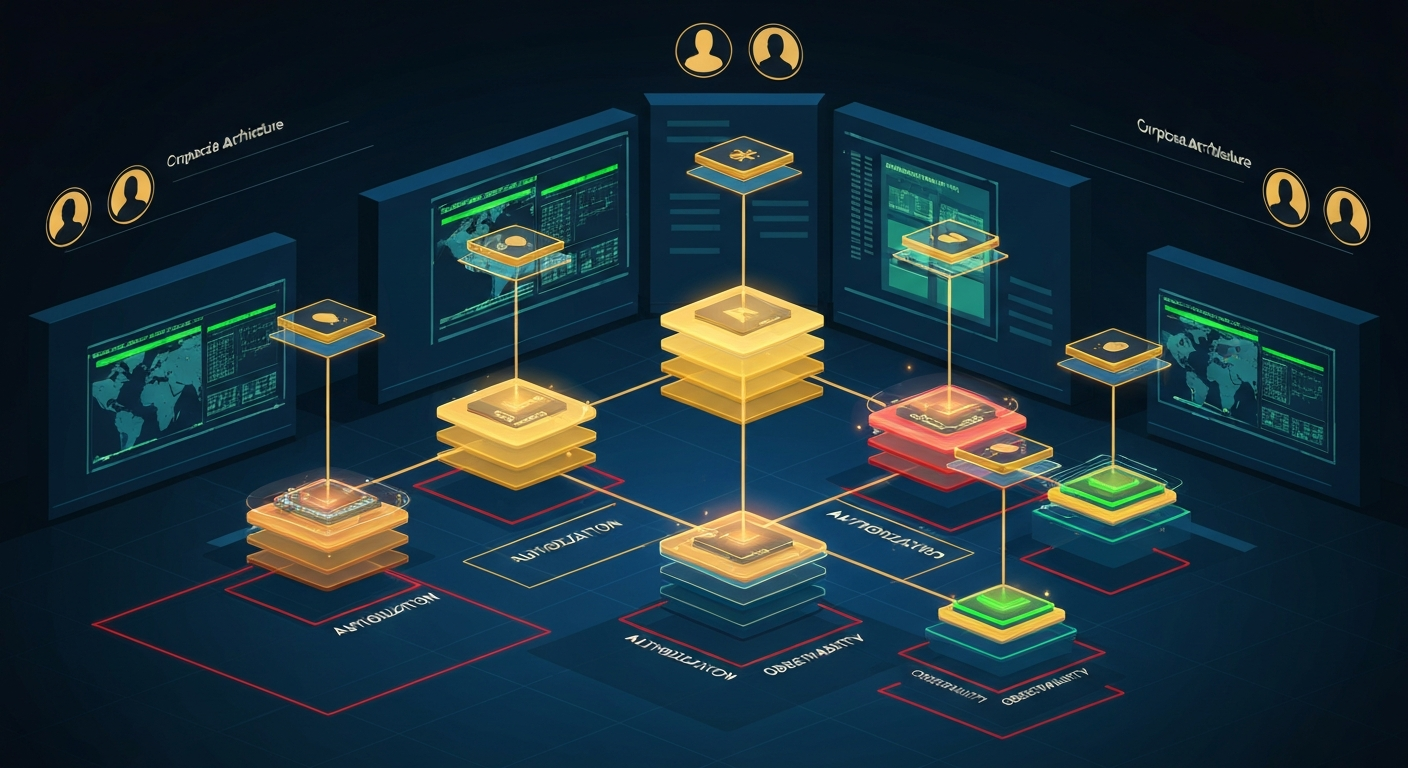
The deployment architecture behind these announcements is not “give employees access to a chatbot.” KPMG is integrating Claude Cowork and Claude Managed Agents directly into Digital Gateway — its core platform for client work, proprietary tools, and AI-enabled workflows. This means agents are not operating in a sidecar. They are embedded in the delivery platform itself, with access to the client data, proprietary templates, and workflow state that lives inside that platform. A task that previously required multi-week engineering cycles to configure an agent for a changing tax regulation can now be generated inside Digital Gateway in under an hour.
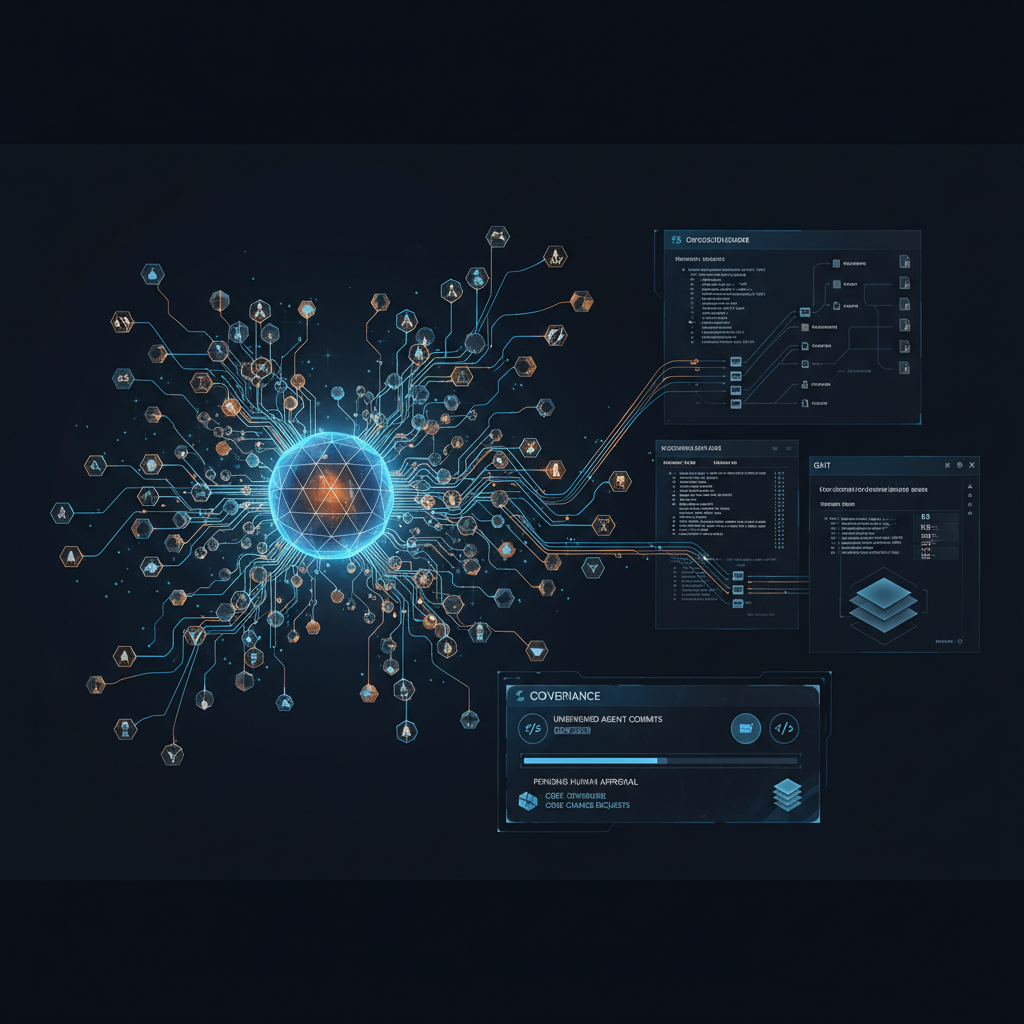
This is a different architecture than deploying an AI assistant. Claude Managed Agents supports agentic loops — the agent receives a task, plans steps, calls external tools (MCP servers, APIs, document stores), handles errors and retries, and produces structured outputs. At KPMG, those tool calls are hitting client data. At PwC, agents are shortening insurance underwriting timelines by nine weeks, which means they’re reading policy documents, running calculations, and producing outputs that underwriters act on. At Deloitte, the scale of 470,000 users means agentic workflows are running against client engagements across every industry vertical simultaneously.
What new failure mode appears?
The failure mode that does not exist in single-model deployments but is live in this architecture is what we might call professional attribution collapse. In a regulated advisory engagement, the human professional is accountable for the work product. The deliverable carries their credential, their signature, their firm’s brand. When an AI agent participates in generating that work product — drafting audit narratives, producing due diligence summaries, running tax calculations — the attribution chain becomes opaque. If the agent produces a subtly wrong output that a busy senior professional signs off on without adequate review, the accountability question becomes genuinely ambiguous: Was it the professional’s negligence, the model’s behavior, or a governance failure at the platform level?
At 1.1 million professionals, this failure mode doesn’t occur occasionally. It becomes statistically inevitable at scale. The question is not whether it will happen, but whether the governance architecture is ready to detect it when it does.
What enterprise teams should evaluate:
- Risk and quality teams: How are agent-assisted work products flagged, reviewed, and signed off differently from wholly human-produced deliverables? Is there an audit trail that distinguishes AI-generated content from human-revised content at the paragraph level?
- Compliance and legal teams: Do existing engagement letters and client agreements cover the use of AI agents in delivery? Most pre-2024 engagement agreements do not contemplate agentic AI acting autonomously on client data, and the liability language is almost certainly inadequate.
- Platform and security teams: Claude Managed Agents supports self-hosted sandboxes (public beta as of May 19) and MCP tunnels that connect agents to private network systems without exposing them to the public internet. Which of these firms has deployed self-hosted execution, and which is still routing tool execution through Anthropic’s infrastructure? The answer matters for client data residency and confidentiality.
Cost / latency / governance / reliability implications:
At this deployment scale, even a 1% agent error rate translates to over 10,000 professionals encountering incorrect or problematic AI outputs per day across the Big Four combined. That is not a model quality problem — it is a governance infrastructure problem. The firms that build systematic human review checkpoints for high-stakes AI-assisted work products will manage this; the firms that treat Claude as a productivity tool and rely on individual professionals to catch errors will eventually face a significant client incident. Latency matters too: agentic loops that call 5-8 tools before producing an output introduce session-level latency that may not be acceptable in real-time client interactions, creating pressure toward shortcuts that increase error risk.
Regulatory & Compliance Angle
The professional services industry operates under a thicket of regulatory obligations that most enterprise AI deployment frameworks simply do not contemplate. For an accounting firm doing audit work, independence rules limit what relationships the firm can have with the technology providers whose tools are used in the audit process. For a law firm doing M&A due diligence, attorney-client privilege applies to the documents being processed, and using a third-party cloud service to process those documents has historically required careful legal analysis. For a consulting firm doing work for a regulated financial institution client, data handling requirements imposed on the client can flow through to the advisor.
Claude Managed Agents complicates all of this in ways that haven’t been publicly addressed. When a KPMG professional runs a Claude agent that calls an MCP server to pull financial data, runs analysis, and produces a draft section of a PE investment memo, that agentic execution potentially involves Anthropic’s infrastructure processing client-confidential information. Whether the new self-hosted sandbox architecture (which keeps execution on the firm’s or a managed sandbox provider’s infrastructure while keeping the orchestration loop on Anthropic’s servers) resolves the confidentiality concern depends on an analysis that requires knowing exactly what data is processed where — and that architecture documentation is not yet public.
The EU AI Act is the other pressure point. High-risk AI systems under Annex III include systems used in employment-related decisions, access to essential services, and systems used in critical infrastructure. Depending on how specific engagements are characterized, some Big Four AI deployments may qualify as high-risk under Annex III — particularly AI systems used in tax decision-making or legal advice where natural persons rely on the output for consequential decisions. The 2027 deadline (after the recent delay) creates a window, but the conformity assessment requirements — human oversight mechanisms, transparency to affected parties, technical documentation — require infrastructure that needs to be built now to be operational by then.
Professional licensing bodies haven’t weighed in yet, but they will. The PCAOB (Public Company Accounting Oversight Board) has open comment processes on AI in audit. The IRS has published initial guidance on AI use in tax practice. The UK’s Solicitors Regulation Authority has guidance on technology in legal practice. None of these frameworks were written with the assumption that an AI agent would be actively participating in producing regulated professional work products at the scale we are now seeing. The firms deploying at this scale are, in effect, running ahead of the regulatory guardrails that will eventually catch up with them.
The SuperML Take
Let’s be precise about what actually happened here. Anthropic did not win three Big Four firms by out-scoring GPT-5.5 on GPQA Diamond. It won them by being the only frontier model provider whose positioning — governance-first, transparency-first, safety-first — was credible enough for regulated professional services firms to put their names on publicly. Bill Thomas, KPMG’s global CEO, explicitly framed the alliance around “security, trust, and governance rather than speed alone.” That framing is doing a lot of work. Professional services firms do not move at startup speed. A statement of that clarity from a Big Four chairman means the governance story was validated through due diligence that involved legal, compliance, risk, and almost certainly client advisory opinions.
But validation of the governance story at the deployment decision level is not the same as governance architecture being solved at the production level. KPMG announcing that Digital Gateway will be powered by Claude by September 2026 is an architecture decision. Building the human review workflows, the audit trail infrastructure, the model behavior monitoring, and the escalation paths that make 276,000 professionals running agentic AI safe in regulated client work — that is an engineering and compliance program that will take years, not months. The announcement timeline and the governance implementation timeline are not the same.
What this means for enterprise AI teams outside the Big Four: you are about to have the model decision made for you. If your primary consulting firm is Deloitte, PwC, or KPMG, Claude is entering your organization through the consulting relationship regardless of what your IT organization decided. Agentic workflows built by your consulting advisors on Claude Managed Agents will be producing deliverables that your executives rely on. The question is not whether you want to use Claude — that decision has been made upstream. The question is whether your own AI governance architecture is ready to receive work products that were produced with agentic AI assistance and have appropriate review processes for them.
The deeper strategic observation is that the Big Four Claude pattern is the clearest demonstration yet of the 2026 AI competitive dynamic: this is not a benchmark race anymore. Anthropic’s revenue is being driven by distribution at scale, not by marginal benchmark improvements. When three firms with over a million combined professionals standardize on your model, the commercial moat that creates is qualitatively different from outscoring a competitor on a leaderboard. OpenAI understood this when it launched DeployCo — a $4 billion consulting subsidiary designed to own the deployment layer. The question is whether 150 Forward Deployed Engineers can match the compounding reach of Big Four firms that already have client relationships with every major organization on earth. In the near term, that is not a contest. Over three to five years, if DeployCo executes, it becomes more interesting.
For anyone building enterprise AI systems in 2026, the practical implication of the Big Four wave is this: your clients, partners, and advisors are all going to have Claude-powered workflows reaching into their organizations over the next twelve months. Governance interoperability — the ability to understand and audit AI-assisted work that arrives from outside your organization — is becoming a production requirement, not a future roadmap item.
Sources
- KPMG and Anthropic Sign Global Alliance and Launch Digital Gateway Powered by Claude — KPMG Global Press Release, May 19, 2026
- New in Claude Managed Agents: self-hosted sandboxes and MCP tunnels — Anthropic Blog, May 19, 2026
- OpenAI Launches the OpenAI Deployment Company to Help Businesses Build Around Intelligence — OpenAI Blog, May 11, 2026
- Anthropic debuts MCP tunnels and self-hosted sandboxes to lock down AI agent infrastructure — The New Stack, May 2026
- Agentic AI Deployment Enters Production Reality — SiliconANGLE, May 11, 2026
- AI News Today — May 28, 2026: 11 Biggest Stories — Build Fast With AI, May 27, 2026
- The AI Agent Era in Financial Services Is Just Beginning — ABA Banking Journal, May 2026
Enterprise AI Architecture
Want more enterprise AI architecture breakdowns?
Subscribe to SuperML.