Agent Stack Update April 2026: Opus 4.7 and MCP Standardization
Anthropic ships a new flagship, the Model Context Protocol crosses 97 million installs and exits Anthropic's control, and Oracle lines up $50B to build the physical plant beneath it all. This week, AI agents stopped being a demo and started looking like infrastructure.


Table of Contents
What Opus 4.7 and MCP Standardization Mean for Enterprise Agents
This market brief explains why infrastructure maturity, not just model quality, is now driving enterprise agent adoption and platform architecture decisions.
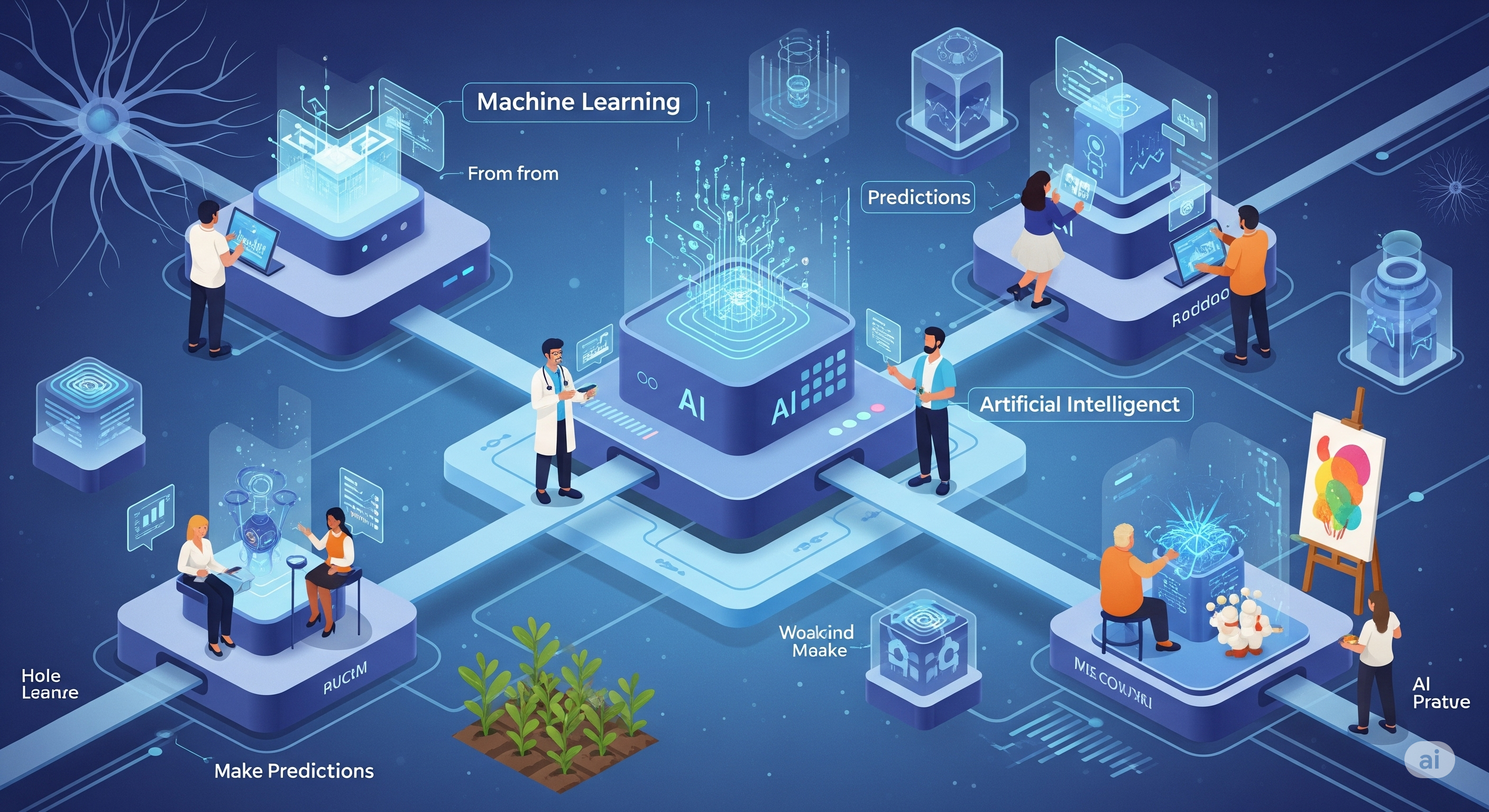
Something subtle happened this week in AI, and it is worth slowing down to notice. We did not get a single, earth-shattering demo. We did not get a new “GPT moment.” Instead, three things happened in parallel that, taken together, say something bigger than any one of them: the agent stack is industrializing.
Anthropic shipped Claude Opus 4.7, a model tuned specifically for long-running agentic work. The Model Context Protocol, Anthropic’s plumbing for how models talk to tools, crossed 97 million monthly SDK installs and moved under the Linux Foundation’s new Agentic AI Foundation. And Oracle laid out plans to raise up to $50 billion in 2026 to build the data centers that will run all of this. Meanwhile, Yann LeCun’s AMI Labs raised a record $1.03 billion to argue, forcefully, that the whole paradigm is still wrong.
If you squint, you can see the outline of a stack forming: the chip and the datacenter at the bottom, the protocol in the middle, the frontier model on top, and a research frontier opening up beside all of it. Let’s walk through what shipped and why it matters if you build, buy, or bet on AI.
Opus 4.7: Anthropic’s Agent-First Flagship
On April 16, Anthropic released Claude Opus 4.7, narrowly retaking the lead among generally available models. The headline is familiar — better coding, better vision, better reasoning — but the details reveal what Anthropic actually cares about.
Opus 4.7 is not pitched as a chatbot upgrade. It is pitched as an agent. The release notes emphasize “long-running agentic tasks,” “stronger instruction following,” and “improved self-verification.” The model handles complex multi-step work with what Anthropic calls rigor — it pays attention to instructions, and crucially, it devises ways to verify its own outputs. That last capability is the quiet difference between a model that fails silently at step 14 of 20 and one that catches itself.
On the coding side, the biggest wins are on the hardest tasks. Anthropic is explicitly positioning Opus 4.7 as the model you hand your gnarliest engineering work to and walk away for a while. That matches the shift in how developers have started using Claude Code, where 1-million-token context windows have made context management itself an engineering discipline — something you spend real effort on, through techniques like rewind, compaction, and subagents.
Vision got a significant bump too. Opus 4.7 now supports images up to 2,576 pixels on the long edge, more than triple prior Claude models. That matters more than it sounds. At that resolution, screenshots of dashboards, technical diagrams, and code editors become legible rather than aesthetic. For any agent that operates a computer — reading the screen, clicking through an app, checking whether a button is grayed out — pixel budget is capability.
Anthropic also introduced a new effort level called “xhigh,” sitting between “high” and “max.” Users now get finer control over the reasoning-latency tradeoff. You might think of it as a throttle: cheap fast answers at one end, deliberate expensive thinking at the other, and now a middle gear for hard problems that do not need the kitchen sink.
Pricing stayed flat at $5 per million input tokens and $25 per million output tokens, which matters for an industry whose unit economics still depend heavily on what a “thinking” step actually costs.
One revealing detail: Anthropic openly conceded that Opus 4.7 trails its unreleased Mythos model. Mythos remains behind Project Glasswing, a small-partner program focused on cybersecurity and advanced reasoning. The public release is the “good but not great” version, and the company is transparent about that. Reading between the lines, Anthropic is treating frontier deployment as a two-track process: ship the safe, pricing-sustainable model widely, incubate the dangerous one narrowly. That is a posture the whole industry will likely converge on.
MCP Crosses 97 Million Installs — and Stops Being Anthropic’s
While everyone was reading Opus release notes, a bigger structural change landed: the Model Context Protocol crossed 97 million monthly SDK downloads. For context, MCP launched in November 2024 with about 2 million installs. In sixteen months, it grew roughly 4,750 percent. That is not a nice linear curve. That is the adoption pattern you see with npm, REST, or Docker — infrastructure protocols, not products.
The ecosystem around MCP now includes more than 5,800 community and enterprise servers covering databases, CRMs, cloud providers, AI tooling platforms, analytics services, and more. The original reference implementations gave way to a real marketplace, with connectors for everything from internal knowledge bases to payroll systems.
The more important news, though, is governance. Anthropic, Block, and OpenAI co-founded the Agentic AI Foundation under the Linux Foundation, and MCP is now being transferred to that neutral body. OpenAI, Google, Microsoft, AWS, and Cloudflare have all signed on as supporters.
This is a different kind of event than a product launch. It is the moment a protocol graduates from a vendor feature to industry plumbing. Think of it like HTTP leaving CERN, Kubernetes leaving Google, or Git leaving Linus’s private scripts. When governance moves to a neutral foundation, two things happen: a single vendor can no longer unilaterally break things, and everyone else finally feels safe building on it.
If you are an engineering leader, this is the signal you were waiting for. The calculus on “should we bet on MCP internally?” just changed. You are no longer betting on Anthropic’s tactical choices. You are betting on the same kind of consortium that runs Kubernetes and Linux. That is a very different risk profile.
There is also a quieter implication for agent builders. With MCP becoming a commodity, differentiation moves up the stack. It is no longer which tools your agent can use — everyone has the same tool catalog. It is how your agent chooses tools, how it composes them, and how it handles failure when a tool misbehaves. The interesting engineering problems move from “write yet another connector” to “orchestrate a hundred of them reliably.”
Oracle’s $50 Billion Bet on Being the AI Landlord
Meanwhile, Oracle is quietly doing something that people underrate: it is becoming the landlord.
Oracle announced plans to raise up to $50 billion in 2026 through a combination of debt and equity to fund a massive AI infrastructure buildout. That is on top of roughly $100 billion in debt already raised for data center expansion. Its customer list for this capacity reads like a who’s who of modern AI — NVIDIA, Meta, OpenAI, AMD, TikTok, and xAI. Oracle is also a key partner in Stargate, the $500 billion infrastructure initiative with OpenAI and SoftBank.
This is the least glamorous story in the stack and arguably the most important one. Every agent you will run on Opus 4.7 or GPT-6, every MCP connector, every multi-step workflow — all of it has to burn through GPUs in a physical building with power and cooling. Capacity is the real bottleneck. Models have been ready to do more than the infrastructure can currently support, and the gap is measurable in queue times and rate limits.
Oracle’s buildout is also notable for what it exposes about margin structure. The stock has been cut roughly in half from its September peak because investors are asking the uncomfortable question: can AI infrastructure actually generate returns at this scale of capex? Oracle’s bet is that contracted demand from major AI labs and enterprises is strong enough to justify the build, even before rates and utilization stabilize. If they are right, they end up as the utility of the AI era. If they are wrong, they end up as the railroad bubble of the AI era. Both outcomes are useful to remember when evaluating the industry’s broader capex cycle.
For practitioners, the concrete takeaway is simpler: in 2026, hyperscaler choice is back to being a meaningful question. GPU availability, agent-friendly service primitives, and pricing for long-running workloads now vary significantly between AWS, Azure, Google Cloud, and Oracle’s OCI. The “default to AWS” reflex from the previous decade is breaking down.
AMI Labs: The $1 Billion Argument That LLMs Are a Dead End
While everyone else is scaling up the current paradigm, Yann LeCun just raised $1.03 billion to argue it is wrong.
AMI Labs, founded by LeCun after he left Meta in November 2025, announced the largest seed round in European history on March 10, at a $3.5 billion pre-money valuation. The round was co-led by Cathay Innovation, Greycroft, Hiro Capital, HV Capital, and Bezos Expeditions, with a guest list that includes Tim Berners-Lee, Mark Cuban, Xavier Niel, and Eric Schmidt.
AMI is not building a better LLM. It is building world models using Joint Embedding Predictive Architecture — JEPA — which LeCun proposed in 2022. The core claim is straightforward: LLMs learn from text about the world, but humans and animals learn from the world itself. A toddler develops a working intuition for gravity, object permanence, and causality long before they have language. LeCun argues that intelligence comes from that physical, predictive substrate, and that language is icing on a much deeper cake.
JEPA models, instead of predicting the next token, learn to predict abstract representations of future states from current states. Skip the pixels, skip the phonemes, predict the meaning. The target applications are robotics, autonomous systems, manufacturing, and healthcare — domains where reasoning about the physical world matters more than producing fluent text.
Whether LeCun is right is the more interesting question. The LLM camp argues that scale plus the right training signals can get you there. LeCun argues that pure next-token prediction hits a wall, and that we are burning billions of dollars on a local maximum. This week, we also saw a physics-informed ML breakthrough from the University of Hawaiʻi at Mānoa that lets models adhere to physical laws during prediction — more evidence that the field is quietly rediscovering the value of hard inductive bias.
A billion-dollar seed, at minimum, changes the conversation. Even if AMI does not produce a product for years, its existence is a visible hedge against the bet that everyone else has made. Industry risk just got redistributed.
The Supporting Cast: GPT-6, Neuro-Symbolic VLAs, and Gemini 3.1 Ultra
A few more developments are worth naming, because they fit the same theme: the field is diversifying along the reasoning axis.
OpenAI’s GPT-6 reportedly uses a two-tier inference framework — System-1 for rapid responses and System-2 for internal logic verification and multi-step deduction — with claimed hallucination rates below 0.1 percent. The naming is on the nose: Kahneman’s fast and slow thinking, explicitly wired into the model. Whether hallucination rates hold up in independent benchmarks is a separate question, but the architectural commitment to explicit deliberation is notable.
Google DeepMind’s Gemini 3.1 Ultra pushed natively multimodal training further: text, audio, image, and video under a single training objective, with a 2-million token context window. Eliminating transcription intermediaries between modalities is not just an engineering convenience — it lets the model learn cross-modal structure that text-only pipelines discard.
And a team at Tufts unveiled a neuro-symbolic Visual-Language-Action system for robotics on April 5, combining pattern recognition with symbolic reasoning. That is the second neuro-symbolic story in as many months (after EMBER), which suggests the community is serious about hybrid architectures rather than betting everything on ever-larger transformers.
What to Watch
Three things to track over the next few weeks.
First, whether Opus 4.7 holds benchmark parity with GPT-6 and Gemini 3.1 Ultra on real agent workloads, not just static benchmarks. The SWE-bench numbers matter less than how these models perform on a week-long engineering handoff.
Second, how enterprise adoption of MCP accelerates now that it is governed by a neutral foundation. Expect a wave of internal platform teams that were holding back to greenlight MCP pilots. If you vendor AI tooling, your connector roadmap should already assume MCP as the substrate.
Third, whether AMI Labs ships any public research artifacts from its JEPA work in the next six months. A billion-dollar seed with no visible output creates its own pressure. If they publish something concrete — even a small-scale world model — the conversation about “what comes after LLMs” goes from philosophical to empirical fast.
The pattern this week is that the agent stack stopped being a collection of exciting demos and started becoming a layered system with real capital behind every layer. Protocol, model, and datacenter, each with billions of dollars of bet on it. And off to the side, a credible alternative paradigm with its own billion-dollar hedge. That is what a technology looks like right before it stops being “new” and starts being “everywhere.”
Related Reading
- GPT-5.5, Google’s 8th-Gen TPU, and Why AI Is Finally Learning to Say ‘I’m Not Sure’
- The Cognitive Architecture Revolution: EMBER, GPT-5.4, and Why AI’s Next Leap Isn’t About Scale
- State of AI 2026: Benchmarks Near Perfect, Transparency at an All-Time Low, and GPT-6 on the Horizon
Sources
- Anthropic: Introducing Claude Opus 4.7
- VentureBeat: Anthropic releases Claude Opus 4.7
- CNBC: Anthropic rolls out Claude Opus 4.7
- Axios: Anthropic releases Opus 4.7, concedes it trails Mythos
- TechCrunch: Yann LeCun’s AMI Labs raises $1.03B for world models
- Crunchbase News: LeCun’s AMI raises Europe’s largest seed round
- Data Center Knowledge: Oracle Eyes $50B for AI Infrastructure in 2026
- Effloow: MCP Ecosystem in 2026 — From Experiment to 97 Million Installs
- Anthropic MCP Protocol Crosses 97 Million Installs
- Johnsviokla: Daily AI News, April 17, 2026 — Opus 4.7 is coming for your tokens
- devFlokers: New AI Research Papers & Breakthroughs (April 2026)
Enterprise AI Architecture
Want more enterprise AI architecture breakdowns?
Subscribe to SuperML.