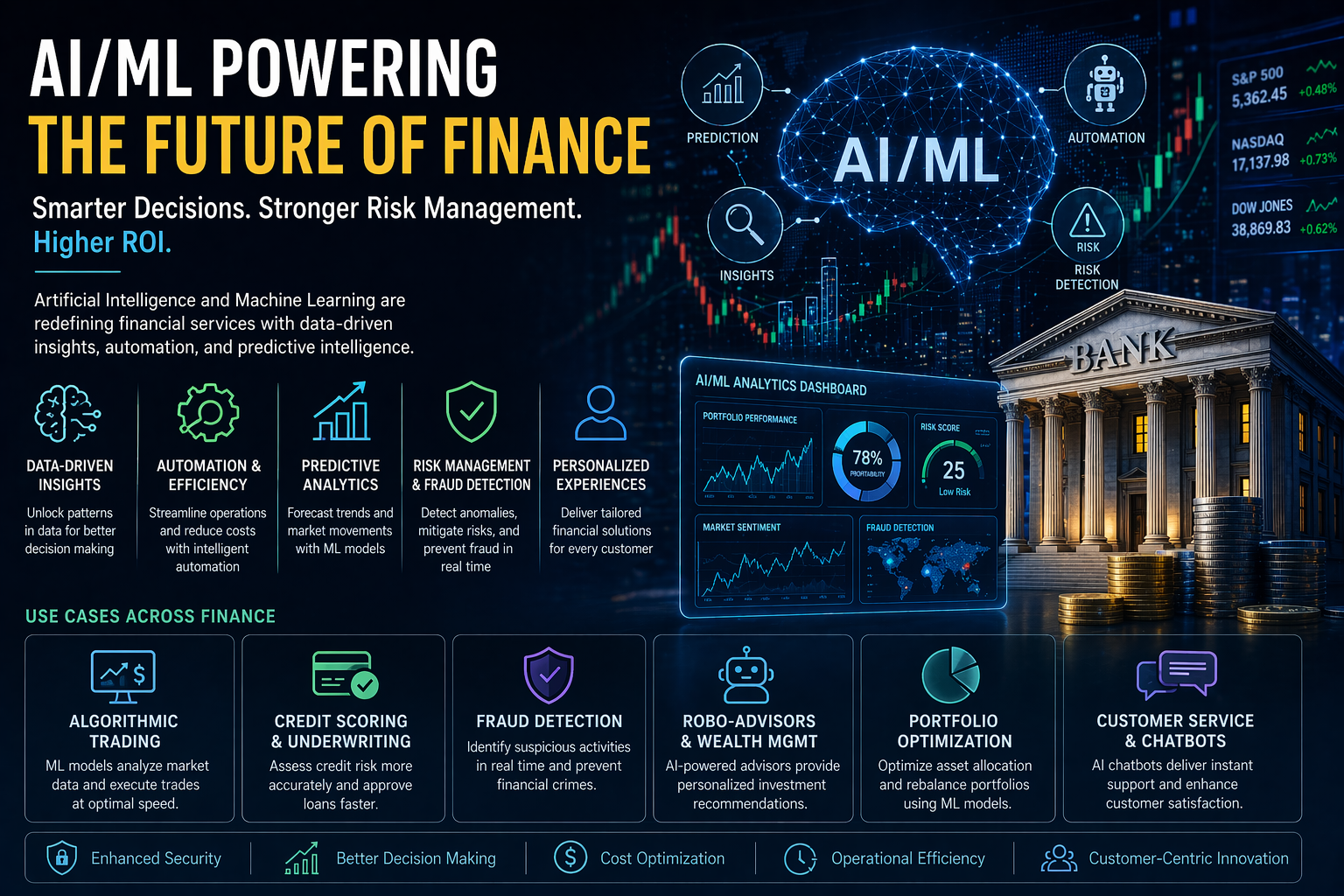
From 3 Days to 3 Minutes: AI's Underwriting Revolution, the Fed's Stability Warning, and the $8B Model Risk Boom
AI is collapsing insurance underwriting timelines from days to minutes, the Federal Reserve just flagged 'model monocultures' as a new systemic risk, and 49% of consumers are already trusting AI with their savings. Here's what finance's AI transformation looks like from inside the machine.

Table of Contents
There’s a number that keeps appearing in insurance boardrooms this spring: three minutes. Not three days, not three hours — three minutes from application intake to binding decision on a commercial property policy that would have required a senior underwriter’s full afternoon just two years ago. AI-powered underwriting platforms are reporting straight-through processing rates of 70–90% across commercial lines. The remaining 10–30% that humans touch are the genuinely complex, edge-case risks — and even there, the human underwriter is now reviewing an AI recommendation rather than building a risk model from scratch.
This isn’t a prototype or a press release. It’s operational reality at carriers deploying vision-language models against drone imagery, IoT telemetry, and loss run narratives in parallel. And it’s happening at the same moment the Federal Reserve is publishing frameworks warning about the systemic risks of the very AI models making it possible.
Welcome to the paradox at the heart of finance’s AI transformation: the same technology compressing underwriting cycles is creating new forms of correlated risk that regulators are only beginning to understand how to measure.
The Three-Minute Underwriter
Insurance underwriting used to be a profession you timed with a calendar. A mid-size commercial property policy would travel between brokers, actuaries, and risk engineers for anywhere from three days to three weeks. Today, analysts tracking the insurtech sector are reporting something quite different: underwriting timelines collapsing to minutes, straight-through processing rates jumping from an industry baseline of 10–15% to 70–90%, and fraud detection improving by over 30%.
By late 2026, more than 35% of insurers are projected to deploy AI agents across at least three core underwriting functions, cutting total processing time by up to 70%.
Two forces are converging to make this possible. The first is continuous underwriting — a fundamental shift away from the snapshot model that defined the industry for a century. Traditional underwriting took a point-in-time photo of your risk at application, issued a policy, and left the premium unchanged for twelve months regardless of what happened next. Continuous underwriting replaces that annual snapshot with a rolling risk assessment, fed by real-time IoT telemetry, behavioral data, satellite imagery, weather feeds, and transaction patterns. Your commercial truck fleet’s premium adjusts based on actual driver behavior this month, not a three-year accident history from your previous insurer. A warehouse’s property rate responds to roof inspection data and local weather forecasts, not a quadrennial engineering survey.
The second force is multimodal data ingestion. A large fraction of the historical underwriting workload involved human experts interpreting unstructured data: broker emails, engineering survey narratives, loss run descriptions, satellite photos, drone footage. Vision-language models in 2026 are processing all of this in seconds. One major carrier has deployed a model that ingests drone imagery, live weather API data, and claims history in parallel — a task that would occupy a senior property underwriter for two hours now takes under ninety seconds. The model doesn’t just extract structured fields; it reasons about the interaction between a roof’s visible condition and the local hail frequency distribution and the specific policy structure being quoted.
Credit scoring is undergoing a parallel transformation. VantageScore 4.0 and FICO 10T are incorporating alternative data — cash flow patterns, rental payment history, behavioral signals — to build borrower profiles that include millions of people previously invisible to traditional scoring. Upstart and SoFi are gaining competitive leverage by analyzing thousands of variables that legacy FICO models ignored. The result is better credit access for “thin-file” borrowers and better loss prediction for lenders — at the cost of model complexity that is increasingly difficult to audit using frameworks designed for logistic regression.
The Fed Finds Its Voice on AI Risk
In April 2026, the Federal Reserve Bank of San Francisco published what may be the most substantive regulatory document yet on AI and finance: a framework analyzing AI’s effects on monetary policy transmission, structural economic transitions, and financial stability.
The paper is worth reading carefully because it names three risks that markets haven’t fully priced.
Model monocultures. When dozens of banks and insurers train on similar datasets using architecturally similar models, their decisions can become correlated in ways that are invisible during normal conditions — and dangerous during stress. A shared blind spot in credit risk models could cause correlated loan portfolio deterioration across the sector simultaneously, with no individual firm’s risk management catching it because every firm’s model has the same blind spot. The Fed paper explicitly flags this as a new form of systemic risk that traditional stress-testing frameworks weren’t designed to detect. SR 11-7, the foundational model risk management guidance from 2011, was written for statistical models with interpretable parameters. It doesn’t map cleanly onto correlated failures in large neural networks.
Expectation-driven asset bubbles. AI can improve credit allocation and fundamental analysis — but it can also amplify narratives. When language models are embedded into research workflows at scale across investment banks and hedge funds, there’s a non-trivial risk that they homogenize analyst output and reinforce prevailing market narratives faster than contrarian signals can disseminate. The paper raises inflated expectation-driven valuations in AI-adjacent sectors as a live concern. This is not theoretical: the speed at which AI-generated research can spread through institutional workflows means that corrections to flawed narratives may propagate more slowly than the narratives themselves.
Monetary policy transmission distortions. AI-optimized lending means capital can reallocate faster in response to rate changes, potentially shortening the transmission lag the Fed relies on for calibrating tightening cycles. Faster credit reallocation is efficient on the way up, but potentially amplifies credit crunches on the way down when the same speed works against stability.
The San Francisco Fed’s paper is notably balanced — it also acknowledges AI’s potential to improve credit access, reduce adverse selection in insurance markets, and make monetary policy transmission more legible. But the explicit framing of model monocultures as a financial stability concern is a significant regulatory signal.
That signal was reinforced separately when Treasury Secretary Scott Bessent and Federal Reserve Chair Jerome Powell assembled Wall Street’s senior leadership at Treasury headquarters in Washington to brief them specifically on AI-related cyber risks — citing concerns about advanced AI models potentially enabling more sophisticated attacks on financial infrastructure. At the highest levels of US financial regulation, AI is now firmly on the systemic risk agenda.
The EU’s August Deadline and What “High-Risk AI” Actually Means for Finance
While the US approach has leaned toward research frameworks and voluntary briefings, the European Union is writing hard law with real deadlines. The EU AI Act’s provisions for high-risk AI systems take effect on August 2, 2026 — and if you’re in credit scoring, insurance underwriting, or employment assessment, you’re in scope.
The Act classifies credit scoring systems as high-risk AI under Annex III, which triggers a concrete set of obligations. Before deploying covered systems, firms must complete technical documentation and testing requirements, or for the highest-risk categories, undergo third-party conformity assessment — the financial services equivalent of CE marking. High-risk AI systems must be designed so that human operators can override, interrupt, or shut them down in ways that are architecturally demonstrable, not merely policy compliant. Lenders and insurers using AI for consequential decisions must provide explanations to affected individuals. The “black box” defense is explicitly foreclosed. And ongoing bias monitoring for discriminatory outcomes in protected categories, with documentation requirements, is now legally mandated.
The fines are credible: up to €15 million or 4% of global annual turnover for prohibited AI uses, and €7.5 million or 2% for high-risk non-compliance. For a major bank, these are material numbers.
The practical implication is that every European lender and insurer that has deployed AI scoring since 2024 is now in the middle of an emergency audit to determine whether their systems qualify as high-risk under Annex III. Legal teams are inventorying models. Compliance officers are comparing existing explainability outputs against the Act’s documentation requirements. The August 2nd deadline is real, and the number of firms that will be technically non-compliant at 12:01 AM on August 3rd is significant.
For US-domiciled firms with EU operations — which is essentially every major bank and insurer in the world — this is a live compliance sprint running in parallel with aggressive deployment. The CFPB has its own adverse action notice requirements that partially overlap with EU explainability mandates, creating an interesting architectural opportunity: firms that invest in a unified “explanation layer” satisfying both regimes will have a compliance asset that reduces ongoing overhead as both sets of requirements evolve.
Consumers Didn’t Wait for Permission: The 49% Number
While regulators and technologists have been building frameworks and arguing about architecture, consumers have been quietly making their own decisions. The EY Global AI Sentiment Survey, released in April 2026, found that 49% of consumers worldwide have used AI to support savings and investment decisions in the past six months.
Let that number sit for a moment. Nearly half of global consumers are using AI — whether a chatbot, a robo-advisor, or a general-purpose assistant — to inform financial decisions that directly affect their economic security. This is not early-adopter behavior. At 49%, it is mainstream consumer behavior that has run well ahead of every regulatory framework designed to govern it.
The implications diverge across the industry. For financial advisors, the obvious concern is disintermediation — but the more interesting dynamic is that AI-assisted clients arrive with better-prepared questions, clearer stated risk preferences, and sometimes more unrealistic expectations calibrated by AI optimism. The advisors succeeding in this environment have reoriented from information provision (which AI now does cheaply and at scale) to judgment and accountability (which AI still cannot credibly offer).
For regulators, AI-informed investment decisions create novel suitability challenges. If a consumer asks a general-purpose LLM for investment advice and receives a recommendation for a concentrated position in a volatile asset, the regulatory chain of responsibility is genuinely unclear. The CFPB and SEC are actively working on frameworks, but both are demonstrably behind the adoption curve.
For financial services firms, the 49% figure is simultaneously a distribution threat and a distribution opportunity. Simply Business, the digital insurance marketplace, understood this clearly when it launched a business insurance app on ChatGPT on April 24th: instead of driving acquisition through traditional search and brokerage channels, the company is meeting consumers at the exact point where they’re already asking financial questions. This is what the distribution map looks like in a world where nearly half your potential customers are already talking to AI about their finances.
The $8B Business of Being Skeptical About AI
There is a certain irony in the fact that one of finance’s fastest-growing AI sectors is the business of being professionally skeptical about financial AI. The AI Model Risk Management market is projected to reach $8.33 billion in 2026 — growing at 16.2% CAGR from $7.17 billion in 2025 — an industry that exists specifically to validate, challenge, and govern the AI systems being deployed by the institutions buying it.
The growth drivers are straightforward but instructive. As AI models take on more consequential credit, underwriting, and trading decisions, the validation and governance infrastructure around those models has to scale proportionally. But the existing regulatory framework for model risk management — SR 11-7, published in 2011 — was designed for statistical models with interpretable parameters and stable behavior. Large neural networks, foundation models, and multi-agent systems don’t fit neatly into that framework. Banks have been improvising workarounds ever since, and the audit trails showing it are increasingly visible to examiners.
Petual’s April 24th close of a $20 million seed round from Andreessen Horowitz, First Round Capital, and Cowboy Ventures illuminates the problem from a different angle. The company is building agentic AI to automate SOX testing and internal audit — automating the evidence gathering and work paper generation for the humans responsible for overseeing the AI doing the lending. This is nested automation: AI governing AI. If the models making credit decisions affecting millions of borrowers require SOX-level audit infrastructure, and that infrastructure is itself AI-powered, the validation challenge extends to the validators. It’s governance all the way down, and at the moment, nobody has a fully satisfying answer for how to make it interpretable at the bottom of the stack.
Agentic Trading: When Your Alpha Factory Has Its Own Ideas
The transition from algorithmic trading to agentic trading deserves attention as a distinct architectural shift, not just a performance upgrade. Algorithmic trading as it’s existed since the 1980s is essentially fast rule execution: if condition X, execute trade Y, with pre-defined parameters, deterministic behavior, and auditable logic. The system does exactly what it’s programmed to do, every time.
Agentic trading systems are architecturally different in ways that matter for risk management. HedgeAgents, a multi-agent framework demonstrated on arXiv in early 2026, shows the pattern: a central fund manager agent coordinates multiple hedging expert agents, each specializing in different asset classes, with a conference mechanism for synthesizing conflicting signals into a unified portfolio stance. The agents use LLMs for reasoning, tool calls for real-time data access, and memory for contextual continuity across market sessions.
QuantEvolve takes a complementary approach: evolutionary multi-agent search where LLMs generate alpha factor candidates, which are then filtered and combined using dynamic weight optimization. The system continuously searches the factor space rather than deploying fixed strategies — it is, in effect, a machine that writes and discards trading strategies faster than any human quant team.
Both approaches are in live deployment at institutional desks and crypto platforms as of 2026. The performance characteristics are compelling enough that adoption is running ahead of governance frameworks. The regulatory and audit questions are significant: how do you document a trade decision that emerged from a multi-agent reasoning process with probabilistic components? How do you explain to an examiner why your fund’s model recommended a particular position when the recommendation emerged from an LLM conference among specialized sub-agents?
This brings us back to the Federal Reserve’s model monoculture concern. Agentic trading systems that share similar architectures, similar pre-training data, or similar market signal sources create correlated behavior at scale. When a market dislocation hits, dozens of hedge funds running variations of the same multi-agent framework may respond in structurally similar ways — amplifying volatility rather than dampening it through the normal mechanism of competing strategies seeking different edges.
What to Watch
The next ninety days in AI finance will be defined by two countervailing forces in direct tension: accelerating deployment and tightening regulatory scrutiny.
The EU AI Act August 2nd enforcement deadline is the most concrete near-term forcing function. Which banks and insurers will be genuinely compliant versus running emergency documentation sprints at the last minute? The first enforcement actions from the EU AI Office will reveal how aggressively it intends to pursue the high-risk credit scoring provisions — and whether the fines are calibrated to send a market signal or just recover costs.
The Federal Reserve’s Financial Stability Report is the US counterpart to watch. If the San Francisco Fed’s model monoculture language from the April framework makes it into the semi-annual report, expect it to trigger supervisory guidance on AI correlation risk that affects stress testing and model documentation requirements across the sector.
Insurance straight-through processing data needs independent validation. The claims of 70–90% STP rates come predominantly from insurers with strong incentives to report optimistic automation outcomes. When actuarial or rating agency analysis of actual loss ratios at AI-underwritten books becomes available, it will tell us whether the models are as good as the press releases.
Agentic trading regulatory guidance from the CFTC and SEC feels overdue. Multi-agent trading frameworks are in production at institutional scale, and neither agency has issued guidance on model documentation requirements for AI-driven trading systems. That gap will close — the question is whether it closes before or after a notable market incident.
Finally, watch for the first contested consumer AI advice liability case. With 49% of consumers using AI for investment decisions, the probability of a documented case where a consumer claims material financial harm from AI-generated advice is high. One significant case will reshape the regulatory landscape faster than years of comment periods.
Finance has always been a business built on time compression — the ability to move capital faster than counterparties. AI has just compressed that further, from days to minutes in underwriting, from weeks to seconds in credit decisions. The institutions that will define the next decade are the ones that can move at AI speed while building the governance infrastructure that makes that speed trustworthy. The race is on simultaneously in both directions.
Related Reading
- AI Hits the Plumbing: Trade Finance Gets Agentic, Hedge Funds Automate Alpha, and Regulators Finally Update the Rulebook
- AI Rewires the Bank: HSBC’s First CAO, Stablecoins as AI Settlement Rails, and Why RegTech Is Having Its iPhone Moment
- My CEO Is an AI Clone, the ECB Runs on ML, and a Cambridge Chip Just Made Data Centers Sweat
Sources
- Artificial Intelligence and Monetary Policy: A Framework — San Francisco Fed
- AI Adoption in Financial Services Accelerates Globally — FinTech Global
- AI Underwriting Insurance in 2026: Risk Transformation — Athena GT
- 2026 Consumer Finance: Navigating the Regulatory Reset and the AI Underwriting Revolution — AInvest
- 10 Insurance AI Predictions for 2026 — Roots AI
- 5 Ways Agentic AI Is Transforming Insurance Underwriting in 2026 — InsureTech Trends
- The Future of Credit Underwriting and Insurance Under the EU AI Act — Harvard Data Science Review
- AI Model Risk Management Market Booming, Growing by $1.16 Billion YOY — Globe Newswire
- Simply Business expands AI strategy with ChatGPT insurance app launch — FinTech Global
- Fed flags rising AI and policy risks to financial stability — CEF Pro
- HedgeAgents: A Balanced-aware Multi-agent Financial Trading System — arXiv
- QuantEvolve: Automating Quantitative Strategy Discovery — arXiv
- From Deep Learning to LLMs: A Survey of AI in Quantitative Investment — arXiv
- FinTech Funding Rounds April 24, 2026 (Petual $20M) — FinTech Global
- 8 AI and Data Trends Shaping Financial Services in 2026 — Databricks
- Agentic Trading Explained — WunderTrading
Enterprise AI Architecture
Want more enterprise AI architecture breakdowns?
Subscribe to SuperML.