When Your AI Vendor Becomes Your Systems Integrator: The Enterprise Architecture Reckoning Behind the OpenAI-Anthropic PE Playbook
OpenAI's $10B 'Deployment Company' and Anthropic's $1.5B Blackstone-Goldman venture both announced May 4 — and both use the same playbook: embed engineers inside your company, redesign your workflows around their model. Here's what that actually breaks in your AI architecture, governance stack, and vendor strategy.


Table of Contents
On May 4, 2026, two of the three most important AI labs in the world decided, apparently in coordination, that they were done waiting for enterprises to figure this out on their own.
OpenAI closed what it’s calling “The Deployment Company” — a $10 billion joint venture anchored by TPG, with Bain Capital, Advent International, Brookfield Asset Management, and 15 other PE firms backing it. The mandate: embed OpenAI engineers inside PE-owned portfolio companies and redesign their workflows around GPT-4o, o3, and the agentic stack. The financial structure promises investors a 17.5% guaranteed annual return over five years. OpenAI itself is in for up to $1.5 billion.
Not to be outdone, Anthropic announced its own vehicle the same day: a $1.5 billion enterprise AI services firm backed by Blackstone, Hellman & Friedman, and Goldman Sachs, with General Atlantic, Apollo Global Management, GIC, and Sequoia also writing checks. Same core idea — Anthropic engineering resources embedded directly inside companies, redesigning workflows around Claude. Goldman and Blackstone expect to use their own portfolio companies as the initial proving ground before expanding to broader mid-market clients.
Both ventures invoke the “forward-deployed engineer” model that Palantir popularized. Both target financial services, healthcare, manufacturing, and retail as priority sectors. Both raised a lot of money on a very short timeline. And both fundamentally alter the relationship between an enterprise, its AI vendor, and the people responsible for making sure neither one breaks production.
If you’re an enterprise AI architect, an ML platform lead, or the person who has to sign off on model risk governance for a regulated company, this is the story that actually matters — not the headline number.
What the Forward-Deployed Engineer Model Actually Means
The Palantir comparison is instructive but incomplete. When Palantir embeds engineers, they bring proprietary tooling and stay for years, building institutional knowledge that creates deep switching costs. When OpenAI or Anthropic embeds engineers, they bring something far more structurally entangled: the very model the pipeline depends on.
Think about what that means in practice. An Anthropic embedded engineer arrives at your healthcare insurance company. They redesign your prior authorization workflow around Claude. They tune system prompts, build agentic approval chains, wire up retrieval pipelines against your claims database, and train your ops team. Three months later they hand it off, and your production system has deep dependencies — not just on Claude’s API, but on architectural decisions made by someone who also works for Anthropic.
This is categorically different from hiring Accenture or McKinsey to build your AI pipeline. A consulting firm’s incentives are to build something your team can own and extend. Their business model is neutral on model selection — they’ll bill you the same whether you use Claude, GPT-4o, or a fine-tuned Llama derivative. An embedded engineer from a foundation model lab has a structurally different incentive: their employer’s commercial success is tied to Claude usage. That doesn’t make them bad actors. It makes them differently aligned — in ways your procurement, legal, and risk teams have not historically needed to think about.
The switching cost argument is also qualitatively different now. Replacing a consulting firm is expensive but tractable: you fire the integrator, hire another one, they read the codebase. Replacing the foundation model when the entire architecture was designed to exploit that model’s specific capabilities — its context window, its tool use patterns, its prompt engineering conventions — is a refactor at the system level, not the vendor level. You’re not just changing the model; you’re re-architecting the pipeline.
The Governance Gap Nobody Is Talking About
Both ventures are targeting financial services as a priority sector. This is where the real friction lives, and it’s going to slow the “17.5% return in five years” math considerably.
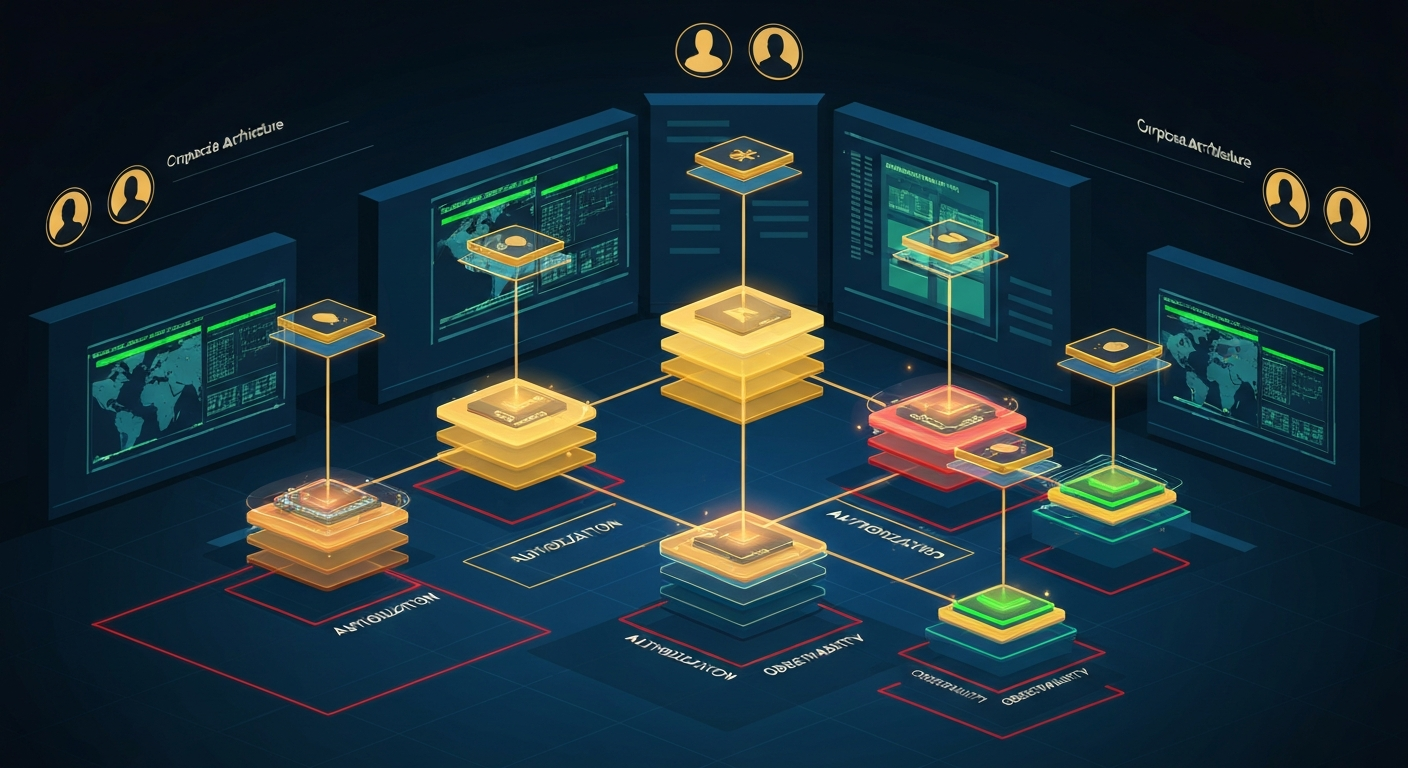
US banking regulators have operated under SR 11-7 model risk management guidance since 2011. The framework is built on a foundational principle: the team that develops a model and the team that validates it must be independent. That independence is the entire point — it prevents the developer from grading their own homework. The OCC, Fed, and FDIC have extended this framework to AI and ML models, with increasing pressure on banks to document model lineage, validate against out-of-sample data, and maintain clear audit trails for model-driven decisions.
When your model provider’s engineers build the production pipeline, SR 11-7’s developer/validator separation becomes structurally awkward. Your model risk management team is supposed to independently challenge assumptions made during model development. If those assumptions were made by Anthropic engineers, and Anthropic is also your model provider, the independence of your validation function depends on your internal team’s ability to challenge choices made by people with significantly more context on the model than they have. That’s not impossible, but it’s not what “independent validation” was designed to look like.
There’s also the question of who bears regulatory accountability. When a Claude-based credit decisioning agent produces a fair lending violation, the OCC comes to the bank — not to Anthropic. The bank’s model risk committee needs to have documentation of every material decision made in the model’s design, including the system prompt architecture, the retrieval configuration, the agent tool definitions. If that documentation lives with Anthropic embedded engineers who rolled off the engagement six months ago, the bank has a model governance problem.
The EU AI Act raises the stakes further. Enforceable from August 2026, it classifies most multi-agent orchestration in high-risk sectors — credit scoring, insurance underwriting, employment, critical infrastructure — as high-risk AI systems. Those systems require conformity assessments, technical documentation, immutable audit logs, and human oversight mechanisms. None of those requirements fall on the AI vendor. They fall on the enterprise deploying the system. Which means the PE portfolio company that just had OpenAI engineers redesign their mortgage origination pipeline now owns the EU AI Act compliance posture for a system built by people who no longer work there.
The Talent Arbitrage That Actually Drives These Deals
It would be easy to read these ventures as primarily financial engineering — PE firms looking for AI-themed returns, AI labs looking for distribution. There’s some truth to that. But there’s a more interesting structural reason this model emerged now.
Enterprise AI deployment has a brutal talent bottleneck. The engineers who can actually design and ship production AI systems — who understand RAG pipeline degradation, compound AI failure modes, agent orchestration at scale — are extraordinarily scarce. Most PE portfolio companies are mid-sized businesses in healthcare, manufacturing, and logistics that have never hired an ML engineer in their history. They cannot compete for this talent on the open market.
The joint venture model threads that needle by providing a centralized talent pool — AI lab engineers, presumably competent — that gets allocated across dozens of portfolio companies. The economies of scale make it viable to deploy that talent in places that would otherwise never access it.
This is genuinely useful. A $200M revenue industrial equipment manufacturer in Ohio has real workflows that would benefit from AI. They don’t have the talent to build it. They do have a PE sponsor who just cut a check into an Anthropic joint venture. That’s a legitimate path to AI adoption that didn’t exist a year ago.
The problem is that “legitimate path to AI adoption” and “sound enterprise AI architecture” aren’t the same thing. Speed of deployment is in tension with governance rigor. PE portfolio companies are under pressure to show operational improvements quickly. Compliance and model risk reviews are slow. The embedded engineer model optimizes for the former. The enterprise’s regulatory obligations require the latter.
What Changes in Finance and Banking Specifically
For banks and non-bank financial institutions, these ventures create a procurement and governance review that will materially slow adoption compared to the timelines the JV press releases imply.
Any financial institution subject to OCC or Fed supervision that brings Anthropic or OpenAI embedded engineers into a production system deployment will need to run that engagement through model risk management — which means a model inventory entry, a validation plan, a challenger model assessment, and potentially a materiality review. That process takes months at well-run institutions, not weeks.
The data security review is equally thorny. Embedded engineers from a foundation model lab will have access to customer data, transaction data, and potentially proprietary underwriting models during the workflow redesign phase. Most financial institutions have strict third-party risk management frameworks that govern exactly this kind of access. NDA and SOC 2 compliance isn’t the end of the review — it’s the beginning.
For insurance companies and asset managers in the EU or UK, the AI Act and FCA guidance on algorithmic systems add another layer. Demonstrating that a system built by your model vendor’s engineers meets Article 9 risk management requirements under the AI Act requires documentation that an external firm is not inherently positioned to provide, because the documentation must be under the deploying organization’s control.
None of this makes the ventures unworkable. It makes them slower and more expensive than the headline narrative suggests — and it means the financial services deployments that actually succeed will be the ones that paired fast AI build cycles with mature governance infrastructure built in parallel, not bolted on after.
The SuperML Take
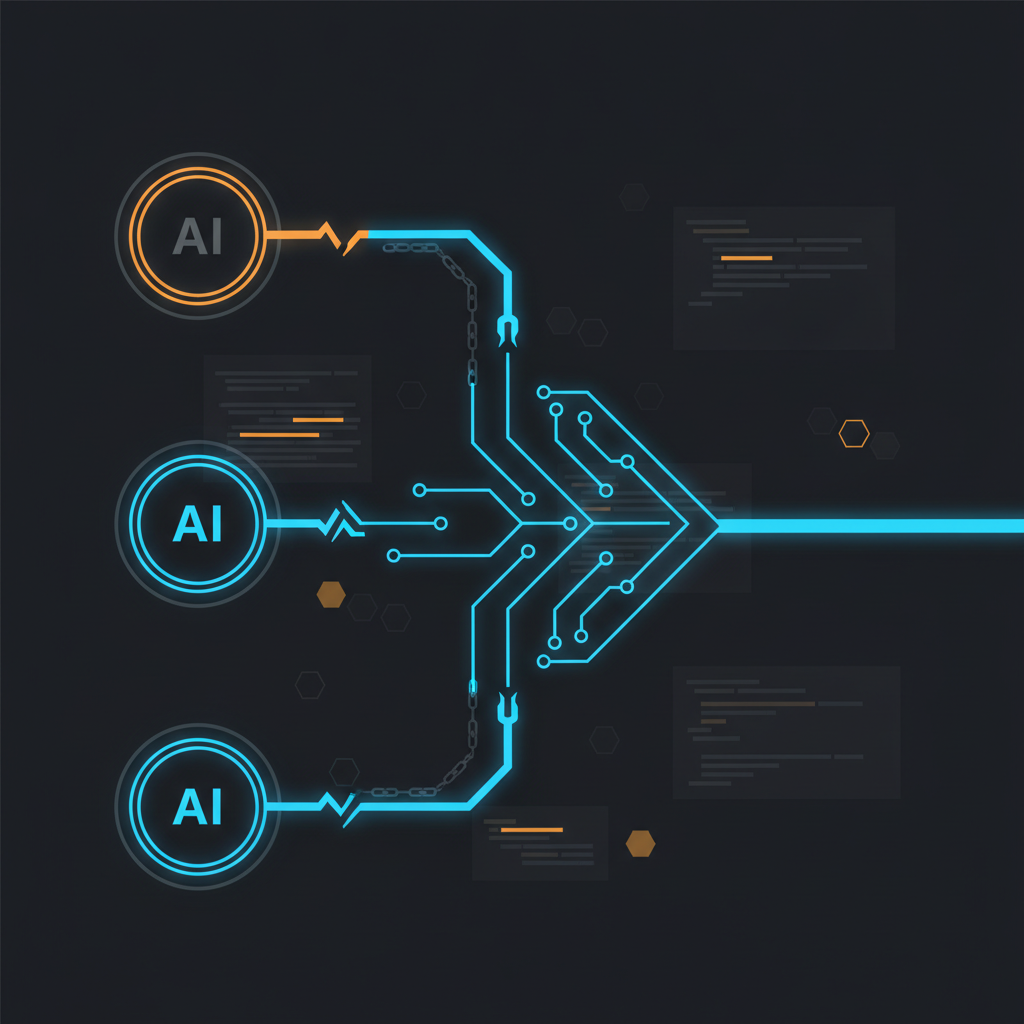
This is a genuine structural shift in how enterprise AI gets delivered — not a repackaged announcement. For the past three years, the enterprise AI stack had a clear layer cake: foundation model provider (OpenAI, Anthropic, Google) → cloud and tooling layer (AWS Bedrock, Azure OpenAI, GCP Vertex) → GSI/consulting layer (Accenture, Deloitte, Wipro) → enterprise. Each layer had its own commercial relationship, its own accountability, and its own incentive structure. These ventures are collapsing two of those layers into one.
The demo version of this story is compelling: AI lab engineers redesign your workflows in weeks, not months, because they understand the model better than any third party ever could. The production version is messier. Enterprises in regulated industries will spend the first six months not deploying, but running governance reviews on the embedded engineer model itself — negotiating data access agreements, scoping model risk validation plans, and trying to figure out who owns the audit trail for a system built by a vendor who is also the model provider.
Senior AI engineers and AI-forward finance executives should read these announcements as a signal, not a solution. The signal: AI deployment at scale requires embedded expertise that most enterprises can’t build internally, and the market is creating a new kind of service to fill that gap. The solution gap: neither of these ventures ships with a governance framework that maps to existing model risk management requirements. That gap is your internal AI governance team’s problem to solve.
The 6-12 month gap between announcement and reality is likely to look like this: the first handful of deployments will be in industries with lower regulatory overhead — manufacturing, logistics, some retail — where PE sponsors can move faster. Financial services will see slower uptake not because the technology isn’t compelling but because compliance review timelines are not adjustable by press release. The 17.5% annual return assumes deployment velocity that regulated industries structurally cannot deliver at the pace the financial model implies.
Longer term, these ventures also change the competitive landscape for large system integrators. Accenture, Deloitte, and McKinsey have built substantial AI practices premised on model-neutral implementation expertise. If foundation model labs are going to embed their own engineers directly, those practices lose their differentiation on AI-native workflow design. The response — and you’ll start seeing it in the next 18 months — will be AI governance and model risk specialization that the labs structurally cannot provide for obvious conflict-of-interest reasons.
Architecture Impact
What changes in system design? When the model vendor architects the pipeline, the system is no longer model-agnostic. Prompt templates, agent tool schemas, retrieval configurations, and orchestration patterns are optimized for a specific model’s capabilities and quirks. Migrating to a different foundation model is now a re-architecture project rather than a configuration change, and the original architectural rationale may not be documented in a form your team can work from.
What new failure mode appears? The “embedded vendor handoff” failure: a production system designed by embedded engineers from a model lab, handed off after the engagement, with the institutional knowledge of architectural decisions sitting with people who no longer work there. When the model updates — and both OpenAI and Anthropic update their hosted models frequently — system behavior changes in ways the enterprise’s internal team may not have the context to diagnose or remediate. The failure is silent degradation rather than hard breakage.
What enterprise teams should evaluate:
- Model risk management teams: Map the SR 11-7 developer/validator separation against any engagement where the model vendor’s engineers will be involved in design. Establish what independent validation looks like when the developer has more model context than the validator.
- Third-party risk management teams: Build a vendor risk review template specific to “model vendor as systems integrator” engagements — covering data access scope, IP ownership of system prompts and agent configurations, and exit plan documentation.
- Enterprise AI architecture teams: Before any embedded engineer engagement, establish a “model portability” requirement — the system design must be documented and portable, not just functional. Insist on architecture decision records that capture why specific model capabilities were relied upon.
Cost / latency / governance / reliability implications: Governance overhead for regulated financial services companies will add 3-6 months and $500K-$2M in compliance review costs to any production deployment involving embedded foundation model lab engineers — even before the first line of production code ships. On the reliability side, systems built by embedded engineers who subsequently roll off carry a higher operational risk premium because the debugging context leaves with them; budget accordingly for a knowledge transfer phase that is longer than the sales process implies.
What to Watch
The first signal to watch is which PE portfolio sectors actually produce live production deployments by end of 2026 — and which ones are still in “governance review.” My bet is manufacturing and logistics move first; financial services and healthcare are at least 12 months behind the venture timelines.
Watch whether either venture publishes a model risk framework or compliance documentation package specific to regulated industries. If they do, it signals they understand the actual adoption bottleneck. If they don’t, expect the financial services deployments to stall at the model risk committee stage.
Keep an eye on how large GSIs respond. Accenture in particular has the most to lose from model-vendor-as-integrator — and they have the compliance infrastructure and regulatory relationships that Anthropic and OpenAI do not. Expect an aggressive pivot toward AI governance and model risk services from the consulting tier within 12 months.
Finally, watch the EU AI Act enforcement calendar. August 2026 is the enforcement date for high-risk AI system requirements. Any financial services company that deployed a system built by OpenAI or Anthropic embedded engineers before that date needs to verify their conformity assessment documentation is complete and under their own control — not sitting in a Confluence instance owned by the model vendor’s consulting arm.
Related Reading
- OpenAI and Anthropic Adopted the Palantir Playbook. Now Enterprise Architecture Teams Need a Counter-Move.
- The Ontology Layer Every Enterprise AI System Needs (But Almost None Have)
- When RAG Breaks at Agent Scale: Pinecone Nexus and the Context Compilation Turn in Enterprise AI
Sources
- Anthropic: Building a new enterprise AI services company with Blackstone, Hellman & Friedman, and Goldman Sachs
- CNBC: Anthropic teams with Goldman, Blackstone and others on $1.5 billion AI venture targeting PE-owned firms
- Bloomberg: OpenAI Finalizes $10 Billion Joint Venture With PE Firms to Deploy AI
- TechCrunch: Anthropic and OpenAI are both launching joint ventures for enterprise AI services
- Fortune: Anthropic takes shot at consulting industry in joint venture with Wall Street giants
- The Next Web: OpenAI closes The Deployment Company, a $10bn enterprise AI bet on private equity
- Blackstone Press Release: Anthropic Partners with Blackstone, Hellman & Friedman, and Goldman Sachs to Launch Enterprise AI Services Firm
- SiliconANGLE: Anthropic and OpenAI establish joint ventures on Wall Street to accelerate enterprise AI adoption
Enterprise AI Architecture
Want more enterprise AI architecture breakdowns?
Subscribe to SuperML.